
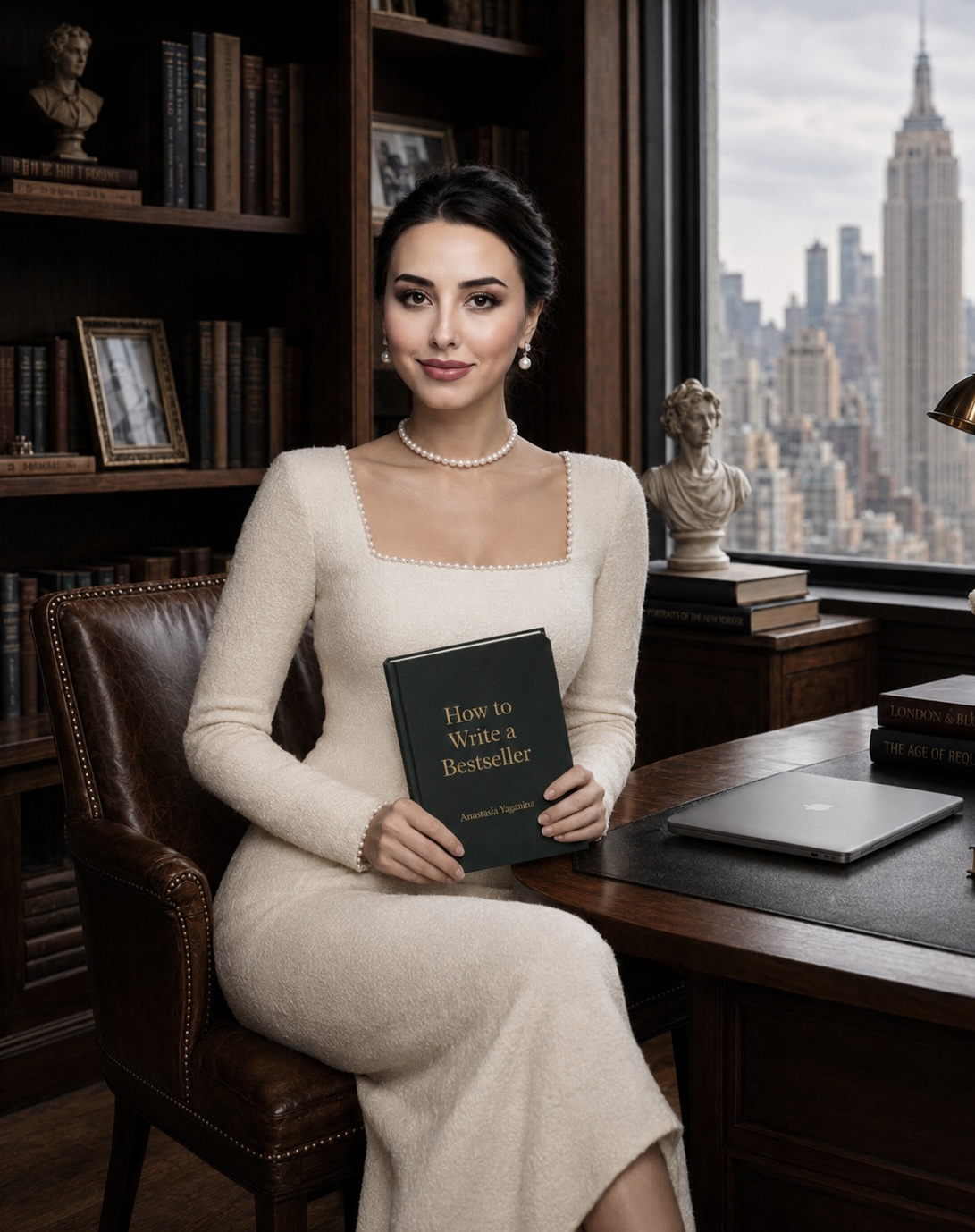
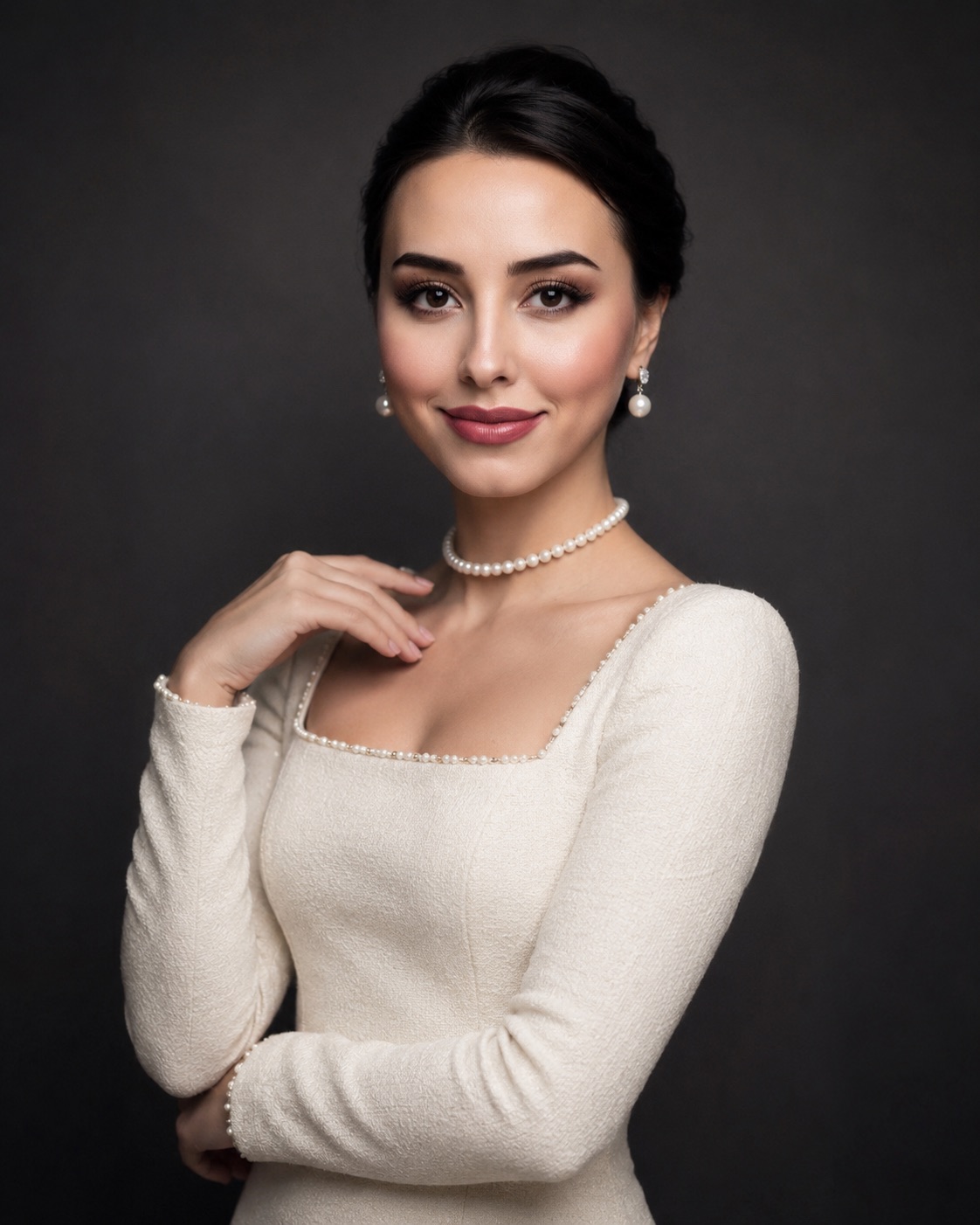
Anastasia Yaganina is an author, book producer, publishing strategist, and founder of Anastasia Empire Publishing. She helps authors, entrepreneurs, and experts transform their ideas, experience, and knowledge into books that become intellectual assets—enhancing reputation, building trust, opening new opportunities, and continuing to work on their behalf for years to come.
instagram.com/anastasiaempire.studio
Email address 855165@gmail.com

Anastasia, today you see a book not only as a creative project, but also as a powerful professional tool. How did your journey in publishing begin?
My journey began not with business, but with a love of books. From an early age, I read constantly, collected quotations, wrote down ideas, and invented stories. For me, writing was a way of making sense of both the world around me and myself.
Later, I became interested in publishing professionally and began studying every stage of the process: structure, editing, design, production, and publication. What started as a personal dream of writing a book gradually grew into a profession and eventually into my own publishing venture. Today, I help create more than books. I work with ideas, knowledge, and experience, helping people shape them into something meaningful and lasting. Yet at the heart of everything remains the same belief that first inspired me: a book is one of the most powerful ways to preserve knowledge, share experience, and leave something of value behind.
When did you realize that a book could become more than a means of self-expression—that it could be a powerful asset for building a personal brand, reputation, and income?
I think most people would agree that a book hardly needs justification or lengthy explanation. We all understand that a book is an intellectual achievement. I've seen the impact it can have—both in my own life and in the lives of others—and it is remarkable.
A well-crafted book does far more than tell a person's story or enhance their status. It showcases their expertise, makes their knowledge visible, and changes the way they are perceived. With a book, a person's voice carries a different weight. Their experience becomes more than a personal story; it becomes a professional asset. In a world overwhelmed by information, trust has become one of the most valuable currencies. A book remains one of the most powerful tools for building that trust. Most people see a book as a product. I see it as a way of turning knowledge into lasting value.
Today you live in New York and have developed an international presence in publishing and author development. How did your professional path evolve, and what helped you reach a new level?
My professional path developed at the intersection of writing, culture, history, strategy, and entrepreneurship. New York had a profound impact on my sense of scale. It is a city where different cultures, powerful ideas, and intense competition come together every day. It teaches you to think more broadly, understand your value more clearly, and step beyond what feels familiar. A defining influence was my work at The Metropolitan Museum of Art, where I spent ten years leading tours through the galleries of the ancient world—from Egyptian art and the civilizations of the Ancient Near East to the Greco-Roman world. My tours explored cultures that flourished centuries before Christ, as well as the history of Greece and Rome during the first centuries of the Common Era. It was there that I came to understand that text is far more than information. It is one of the ways humanity preserves its memory. Everything we know about ancient civilizations—their beliefs, laws, wars, art, daily life, and ways of thinking—has reached us through inscriptions, chronicles, manuscripts, and books.
The texts of the past are not simply records of what once happened. They help us understand why we think, choose, and live the way we do today.
That is why, to me, a book is more than an object or a product. It is a continuation of human experience. Through books, knowledge passes from one generation to the next, helping to shape culture, society, and our understanding of who we are.
For that reason, working with books became a natural continuation of my own journey. I have always experienced the world through text. Today, that perspective remains at the heart of my work: helping authors transform their knowledge, experience, and ideas into books that can outlast a single moment and continue creating value for years to come.
Looking at your personal and professional transformation, what were the pivotal moments? Were there times when you questioned your path? What helped you persevere and ultimately scale your business?
I realized that the things we do best are often the things we genuinely love. That is why it is important to listen to yourself and pay attention to what truly resonates with you. For me, creating a book is a little like watching a flower unfold. It is a delicate, gradual, and beautiful process. Along the way, it is not only the project that changes, but the person creating it as well.
Growth begins where things feel uncertain—in new decisions, mistakes, and greater responsibility. What helps you keep moving forward is discipline, along with the understanding that you are dedicating your time and energy to something that truly matters to you.
You guide authors through the journey from idea to publication. What does that process look like today, and what mistakes do first-time authors most often make?
The biggest mistake is thinking that a book begins with writing. In reality, a strong book begins with a clear concept: who it is for, what purpose it serves, and what role it will play after publication. The second mistake is trying to do everything alone. A book is a collaborative effort, and its success depends on many elements, including structure, editing, design, production, strategy, and an understanding of the market. We do not simply create books. We develop each project with intention, so that the author receives not only a beautifully published book, but something that continues to support their goals long after it is released.
Why is an idea alone not enough to create a truly powerful product?
An idea is only the beginning. It may be beautiful and insightful, but without structure, form, and a strategy, it remains unrealized potential.
There is a significant distance between “I have an idea” and “I have a finished product.” Inspiration alone is not enough to bridge that gap. It also takes discipline, professional guidance, and the support of the right team.
A strong book comes to life when an idea takes shape and becomes something real, structured, and meaningful. That is when it begins to create lasting value.
Your philosophy centers on the idea that a book is packaged expertise. How do you explain to clients the difference between simply writing a book and creating a strategic asset that works for their name, business, and opportunities?
Many people already possess something incredibly valuable: experience, knowledge, professional expertise, personal stories, observations, and ideas. But as long as those things remain only in their minds, notebooks, conversations, or scattered posts, they cannot reach their full potential. Simply writing a book means putting your thoughts on paper. Creating a book as a strategic tool means shaping those thoughts into something that builds trust, strengthens your reputation, and creates new opportunities. I always tell authors that a book should answer not only the question, “What do I want to say?” but also more important ones: Who is this for? What value does it offer? What impression does it leave? What kind of reputation does it help build? And what should happen after someone finishes reading it? A good book is more than text. It is knowledge and experience brought together in a form that can be shared, gifted, sold, translated, presented to partners, used in business, and passed on as part of your legacy. That is the difference. An ordinary book may remain simply a chapter in someone's life story.
A thoughtfully developed book becomes part of a person's professional identity. It serves as a calling card, a reflection of their expertise, a source of trust, and something that continues to represent them even when they are not in the room.
Today the marketplace is saturated with information and content. Why does the book remain such a powerful positioning tool despite the rise of social media and short-form formats?
Precisely because the market is oversaturated. The more fast content we consume, the more valuable depth becomes.
Social media gives us speed, but not always permanence. A book works differently: it requires attention, structure, and time, and because of that, it creates a different level of trust. A book is not a stream of content; it is a point of view. It is not a reaction, but a considered position. A good book may work more slowly, but it works longer—sometimes for centuries.
Your own experience as an author is a story in itself. Tell us about your Italian cookbook. Why that topic, and how does it connect to you personally?
One of my most recent books, published in the spring of 2026, is a collection of Italian recipes in English, Russian, and Ukrainian. For me, it is an example of how a personal passion can come together with a clear vision and become something both beautiful and meaningful.
I chose the culinary genre deliberately. Food is a universal language, and Italian cuisine is loved all over the world. But I wanted to create more than a collection of recipes. I wanted to create a small cultural journey. The book brings together food, history, literature, and aesthetics. The recipes are written not as simple instructions, but as short essays filled with the atmosphere of a region, historical details, sensory imagery, flavor, color, aroma, and mood. As a result, readers can enjoy not only the process of cooking, but the experience of reading itself.
I wanted to create a book that people would enjoy having in their homes—not only to use in the kitchen, but also to place on a bookshelf, give as a gift, open in the evening with a cup of coffee, or simply browse for inspiration. The cover design and layout were inspired by Art Deco and the elegance of the 1920s, with the feeling of an old European villa, warm light, and vintage charm. For me, it is more than a cookbook. It is an object with character, atmosphere, and soul. It inspires people not only to cook, but also to live more beautifully: to set the table thoughtfully, create a welcoming atmosphere, gather people together, and remember that food is not only about taste, but also about culture, memory, and the joy of connection.
You work at the intersection of creativity and business. Howdo you maintain a balance between aesthetics, depth, and commercial effectiveness?
For me, there is no contradiction between those things. The strongest projects emerge where meaning, aesthetics, and thoughtful planning come together. The process does not begin with sales. It begins with purpose: who the book is for, what value it offers, and what trust it creates. Aesthetics enhance perception, while strategy transforms beauty and substance into measurable outcomes—visibility, sales, reputation, and new opportunities. I never choose between beauty and effectiveness. I build them so that each strengthens the other.
What major goals are you pursuing today? Do you plan to expand your publishing project internationally and work with authors from around the world?
Today, I live in New York, but my work has long extended beyond any one country. We create projects in different languages and work with authors from many parts of the world. At this stage, my focus is not so much on expanding geographically as it is on raising the quality of every project—the strength of the concept, the depth of the ideas, the aesthetics, the structure, and the overall level of execution.
I do not simply work with manuscripts. I work with ideas that deserve a long life. Because a strong book is never the end of the journey—it is the beginning of something much bigger.
What advice would you give to someone who has been thinking about writing a book for years but hasn't started yet?
I think many people never begin writing a book not because they have nothing to say, but because the process itself feels overwhelming. They don’t know where to start, how publishing works, how to organize their ideas, or how to transform a collection of thoughts into a finished, professional book. Just as often, they doubt themselves. They wonder: Is my story interesting enough? Are my ideas valuable enough? Would anyone actually want to read what I have to share? I believe every person is unique, and every story has value when it is developed thoughtfully and presented well. The first question is not simply, “How do I write a book?” The more important questions are: Who is this book for? What problem does it solve? How might it help someone? What knowledge, experience, or transformation can it offer the reader?
If we're talking about fiction, there are additional questions to consider. Who are the characters? What is the central conflict? What emotional journey will the reader experience? At what point does the story truly come alive? One of the most common mistakes aspiring authors make is trying to create the perfect first page. In reality, the best place to begin is often not the beginning at all. Sometimes it is the strongest scene, the turning point, the conflict, or the moment where the story already has energy and momentum. Once you discover the heart of the story, the beginning can be built around it. That understanding is one of the reasons I created my publishing studio. We help people move from an idea, a rough draft, scattered notes, or even voice recordings to a fully developed, professionally published book. My role is to guide that journey: helping authors clarify their ideas, shape the narrative, create structure, refine the language, develop the manuscript, and ultimately bring the book into the world. My advice is simple: don't wait until you feel completely ready. Start by understanding why your book matters, who it is meant to serve, and what you hope it will contribute. Then begin collecting the pieces—ideas, memories, scenes, observations, and experiences. You do not have to navigate the process alone. With the right guidance, support, and publishing team, what initially feels complicated and overwhelming can become a finished book—one that reflects your voice, your knowledge, and your unique contribution to the world.