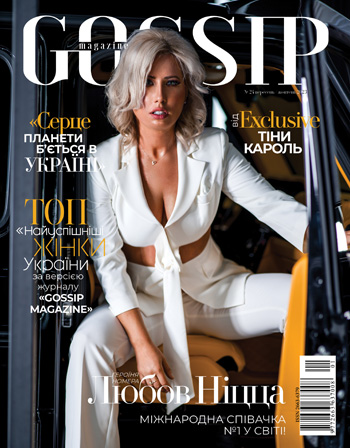
Over more than 16 years in the permanent makeup industry, Iryna Tkachuk has evolved from a practicing artist into a specialist who has developed her own professional approach. More than 10,000 procedures have given her not only extensive hands-on experience, but also the opportunity to deeply study different skin types, pigment behavior, and the healing process.
Years of practice became the foundation for developing her signature techniques — a system built on the understanding that there are no universal solutions, because every client requires an individualized approach. Today, Iryna Tkachuk not only applies these methods in her own practice but also shares them with other artists. She has been teaching since 2016, creating educational programs and has already trained more than 650 students online.
Inst: irynatkachuk.pm
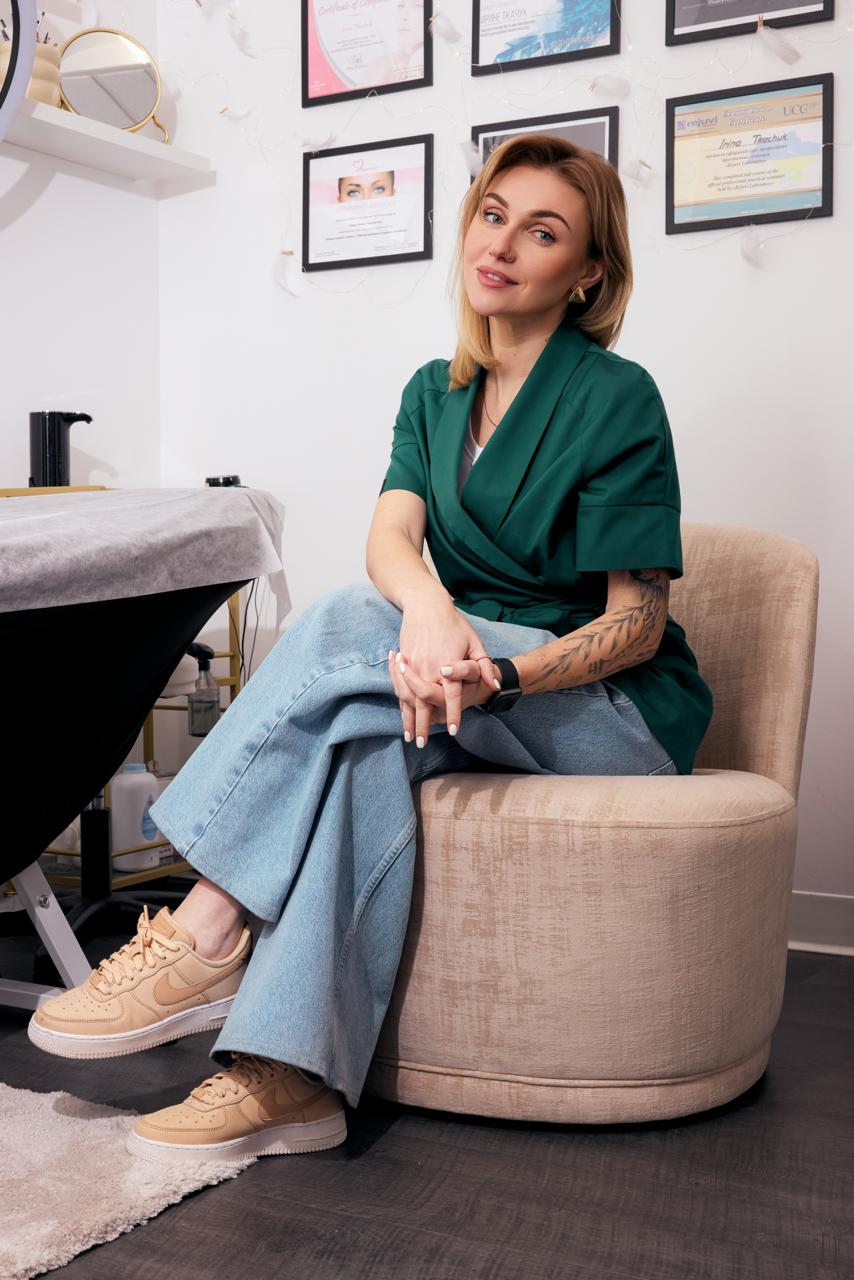
Iryna, you have performed more than 10,000 procedures throughout your career. How has such extensive hands-on experience shaped your professional perspective?
My professional perspective did not change after reaching a certain number of procedures — it continues to evolve with every single client. More than 10,000 procedures means more than 10,000 different people, skin types, concerns, and professional situations. It has always been important for me not simply to know how to perform a particular movement, but to understand why it works and what the result will look like after the skin has healed. Observation and analysis have taught me that there is no universal algorithm in permanent makeup; every case requires an individualized approach. Today, I combine creativity with a deep understanding of biology, anatomy, and the specific characteristics of each person’s skin.
What professional patterns did you begin to notice in your work that eventually became the foundation for your signature techniques?
For many years, I observed my clients and analyzed their skin condition, working parameters, pigments, and healed results. That is how I realized that it is not enough to simply classify skin as dry or oily; you also have to consider its thickness, density, elasticity, and ability to recover. The thinner or more mature the skin, the more delicate the procedure needs to be, and the more the technique must be adapted. I also reached some of my most important conclusions through my own mistakes, and today I consider that experience just as valuable as successful results. The most important thing I learned is that skin is a living organ, so unnecessary trauma does not help achieve a better result. The foundation of my signature techniques is not following a universal formula, but knowing how to assess each individual client’s skin and adapt the entire procedure accordingly.
Tell us about a professional challenge that once made you look for your own solution. What was it about standard PMU approaches that did not work for you?
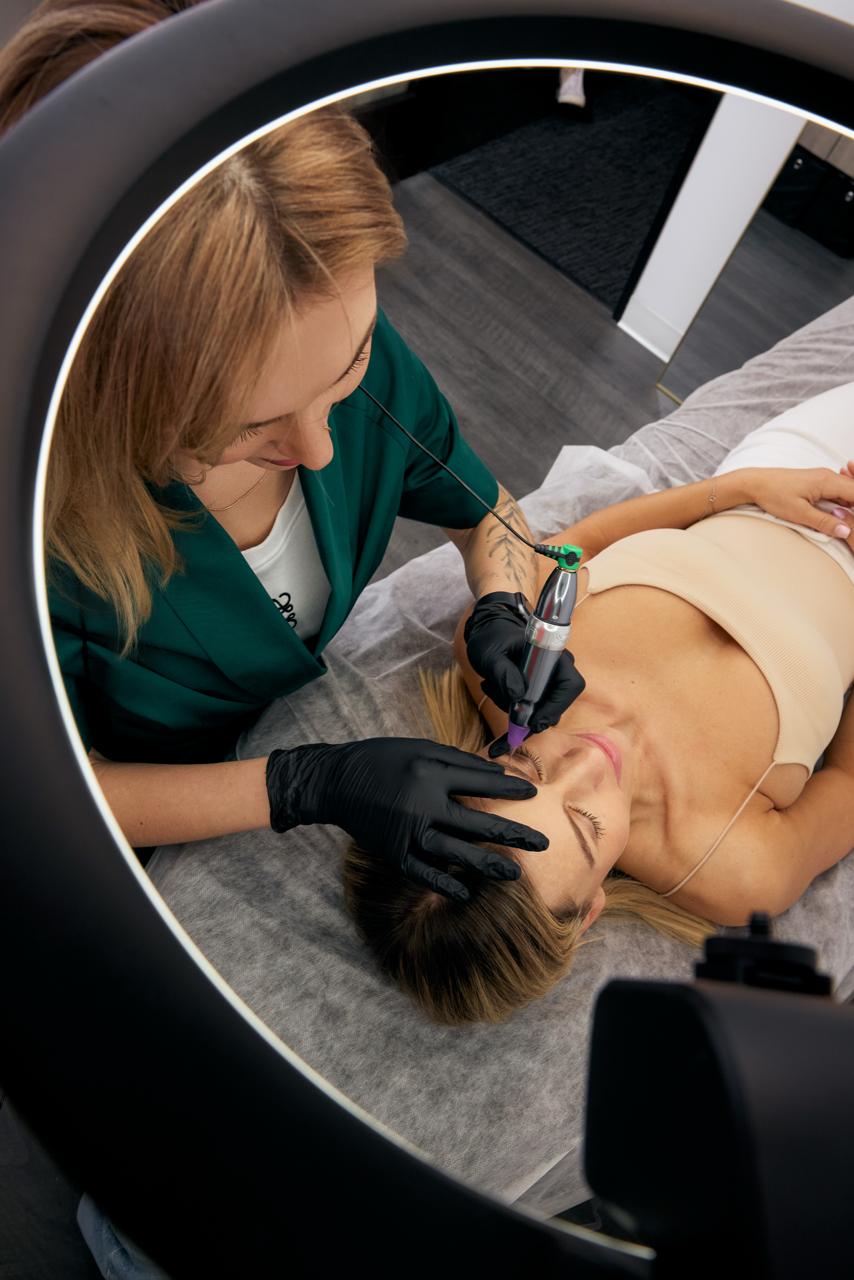
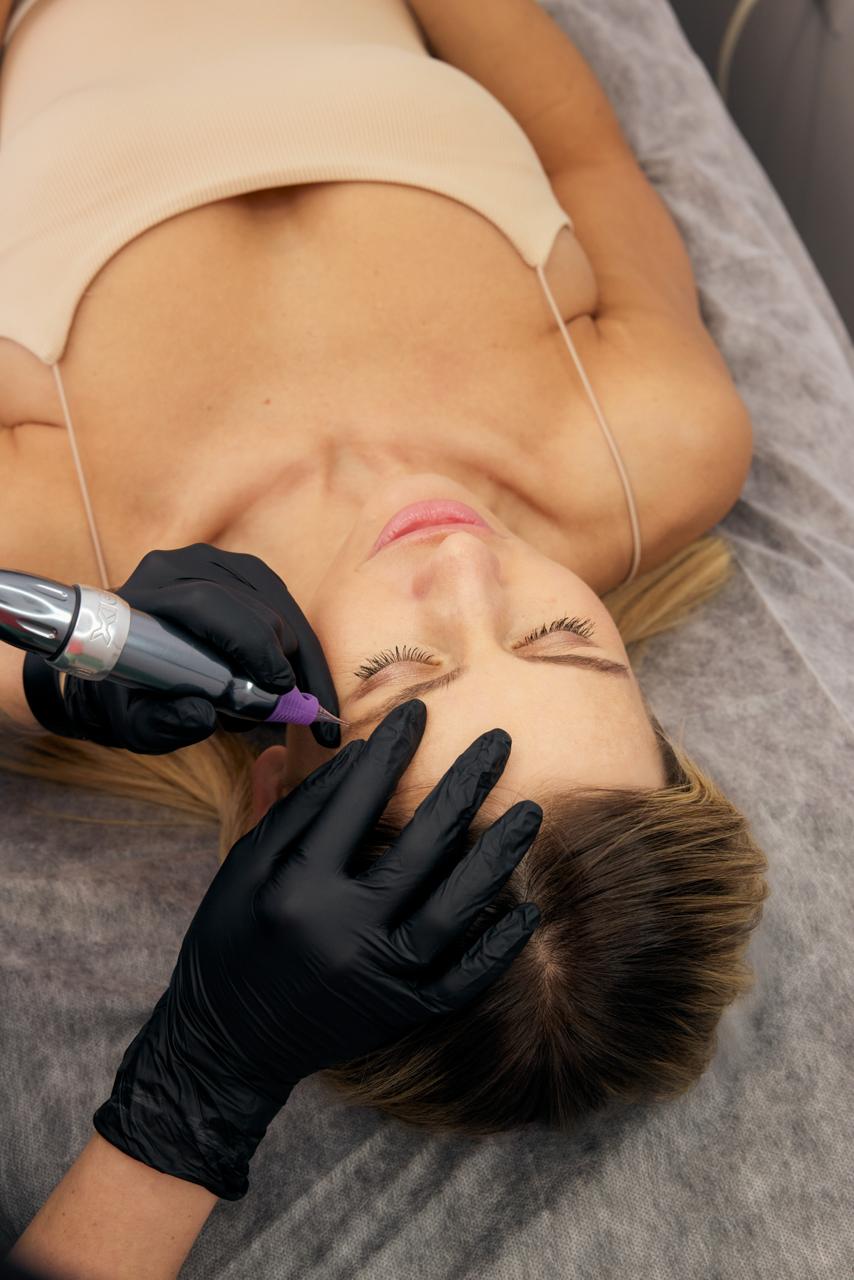
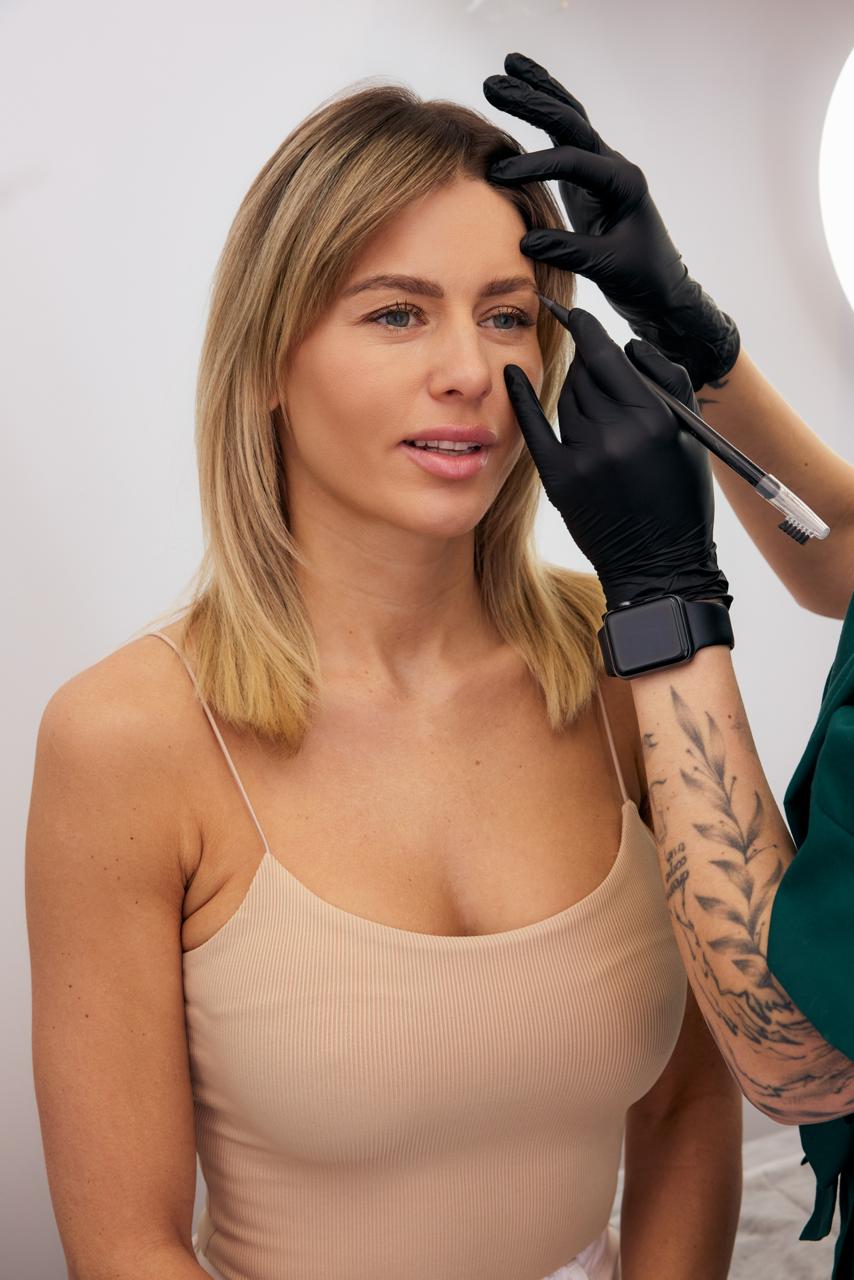
One of the main problems for me was the contrast between the promised natural-looking result and the way a client looked immediately after the procedure. A woman could leave with very bold, graphic eyebrows knowing that she still had seven to ten days of healing ahead of her, which was particularly inconvenient for those who work with people and lead active lifestyles. That made me start asking myself: why should someone have to go through discomfort in order to achieve a beautiful result? Another thing that did not work for me was the pursuit of mathematical symmetry without taking natural facial expressions and facial anatomy into account. I wanted to see the person in motion, listen to her, and create a shape that would look harmonious specifically on her face. That is how my own approach gradually developed.
Iryna, what fundamentally distinguishes your signature methods from techniques that artists can learn in standard courses?
My signature methods primarily teach artists not to work according to a single template, but to see the individual person — their skin, facial expressions, lifestyle, and specific needs. An important part of my methodology is minimizing skin trauma, which can reduce the recovery period to approximately three to four days. An eyebrow procedure can take around 40–50 minutes because the technique does not require unnecessary passes over the skin. It is important to me that a client already looks harmonious immediately after the procedure and can continue with her normal life. I am not trying to dismiss classical techniques; I want to give artists more tools and teach them how to analyze each situation independently and make informed professional decisions.
You have been teaching other artists since 2016, and more than 650 students have already completed your online programs. What did you have to learn yourself in order to turn your experience into a system that other professionals could understand?
After I began publishing content on social media, other artists started reaching out to me with professional questions, and I realized how much accessible, foundational knowledge was missing. I created a YouTube channel and began sharing for free what I considered essential for safe and high-quality work. Later, students from different countries started traveling to learn from me, and that was when I realized that I needed to learn not only how to do the work, but also how to explain my experience to others. Teaching taught me patience and the ability to explain complex concepts in simple terms while taking each student’s individual pace into account. My own experience, including the fact that many professional skills did not come easily to me, helped me break down every action into clear and understandable steps. That is how my teaching system gradually developed, with the goal not simply of demonstrating a technique, but of teaching artists to understand it and work independently.
Iryna, you are now entering a new stage by organizing your years of experience into professional educational manuals. What problem do you want these materials to solve for artists?
The idea for these professional manuals came from my own teaching experience. After intensive training, an artist receives an enormous amount of information that is impossible to remember all at once. I want to create a kind of professional reference — a resource that an artist can turn to directly while working whenever a question or an unusual situation arises. It will not simply describe techniques, but provide a decision-making system: how to assess the skin, choose the right tool, pigment, and working parameters, and understand how each action will affect the final result. Unlike a video lesson, a manual can be opened quickly at the exact stage where guidance is needed, so I see it as a kind of professional handbook for artists. Essentially, I am organizing my own professional system, which has developed over many years and is based not on trends, but on an understanding of biology, anatomy, the physics of the process, and the properties of the skin. It is important to me that these materials remain relevant for years and help artists not simply reproduce a technique, but think independently and make professional decisions.
Today, you are developing several areas simultaneously: practicing in California, training artists, developing your signature methods, and creating educational materials. What do you see as the next stage of your career?
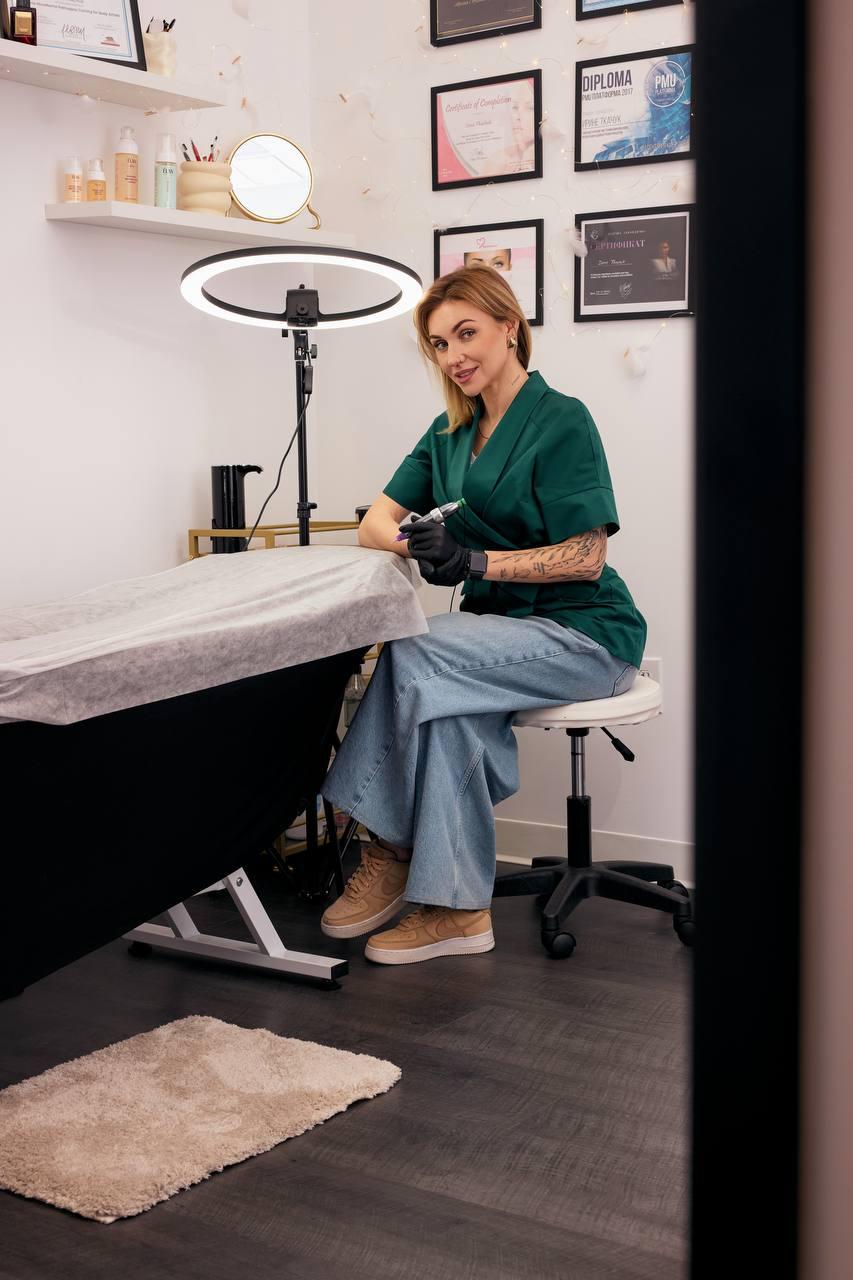
I see the next stage as the further development of my methodology and sharing my experience with other artists. What is especially important to me is that my students are already incorporating my principles into their own programs and passing them on to others — that is how knowledge continues to live and evolve. Now I want to scale this direction in the American market, introducing artists not only to my techniques, but also to my philosophy of work: respect for the skin, an individualized approach, and the ability to truly listen to the client. Another direction I plan to revive is my own professional pigment line, which I previously developed and produced in Ukraine. These pigments were used by professionals in their work and were created based on my many years of practical experience. Now that I am based in the United States, I want to bring this direction back to life in the American market and offer artists a professional product that will help them achieve predictable, high-quality results in their work. I want an artist to be perceived not simply as someone who does eyebrows, but as a professional who first understands the client’s needs and only then offers a solution. That is why, for me, the goal is not to scale the number of procedures, but to scale the approach itself. The most valuable result for me will be seeing my knowledge, methods, and professional experience continue to evolve and be passed from one artist to another without my direct involvement.