
Moving to another country often becomes a moment when you have to rebuild not only your everyday life, but also your professional identity. This is especially true in the beauty industry, where client trust, reputation, and expertise are built over years. Viktoriia Ivaniv went through this journey in New York, gradually establishing her own name in permanent makeup, lash services, and beauty education. Today, her work is defined by a systematic approach to the profession, proprietary techniques, and training for beauty professionals who want to reach a new level. In this interview, we speak with Viktoriia about her professional journey, the standards of quality work, the principles behind her techniques, and how one specialist’s experience can evolve into knowledge that benefits an entire professional community.
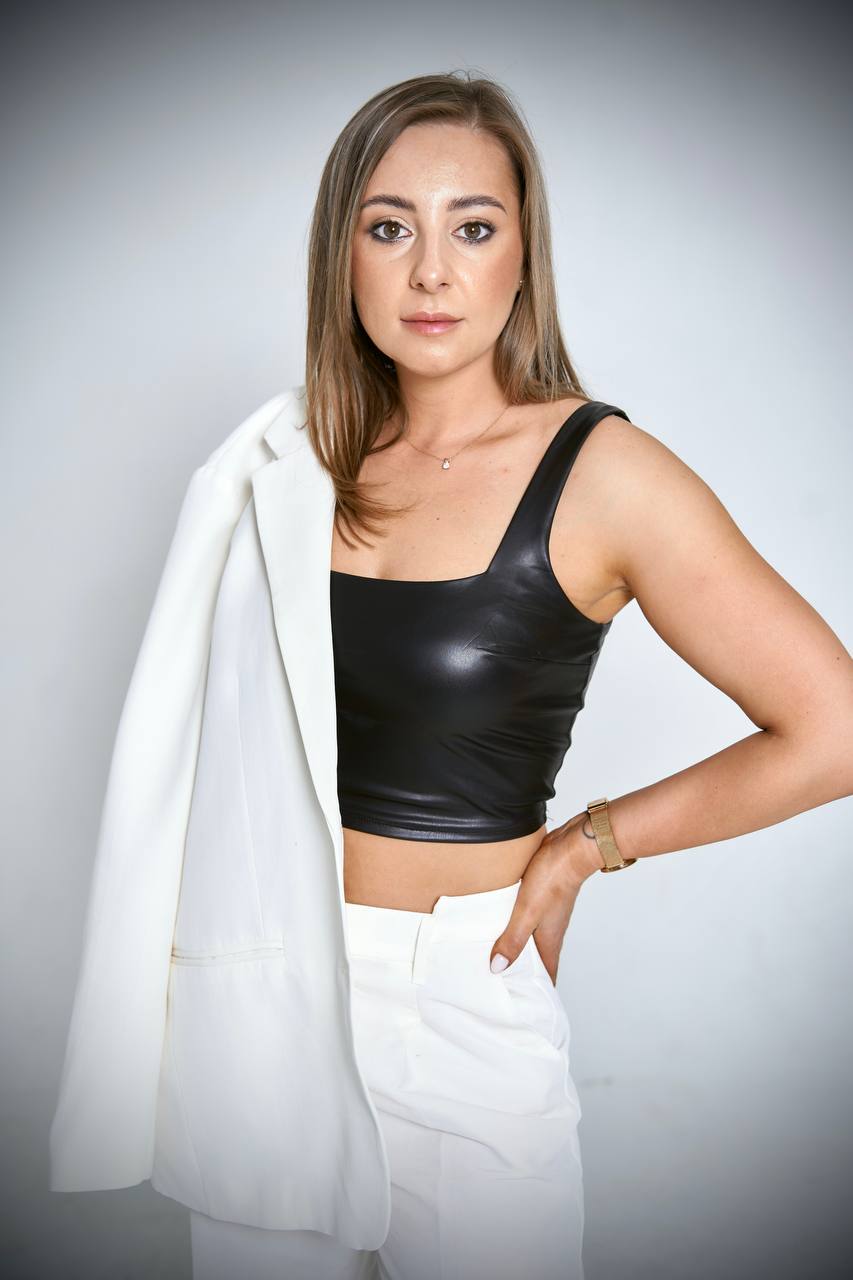
Viktoriia, if we go back to the time when you had just moved to the United States, what was your professional reality like back then?
My professional journey in beauty actually began in the United States, because I had never worked in this field in Ukraine. So, in America, I essentially had to start my professional career from scratch. At the time, I had two young children, and my husband and I did not have anyone we could rely on for help. I realized that I wanted to be a fully present mother while also pursuing my professional ambitions, so I needed a business that I could combine with motherhood. I started training: first in eyelash extensions, then lash and brow lifting, brow shaping, and eventually permanent makeup. Alongside developing my skills, I was learning how to build my own brand, practicing extensively, and gradually establishing my name from the ground up. I am very grateful to my husband for supporting me during that period: he believed in my ideas and decisions even when I was still learning to believe in myself. Did I imagine that I would one day have my own business in New York? Probably not. At first, my goal was simply to find a way to work, stay close to my children, and become independent. Little by little, those small steps grew into something much bigger.
What turned out to be the most challenging part of establishing yourself professionally in America?
I think the hardest part was not learning a new profession, but learning how to build trust in myself within a completely new environment. When you come to a new country without a professional reputation, client base, or established name, you have to prove step by step that you are someone people can trust. That is why I worked not only on my technical skills, but also on client communication, service, social media, and my personal brand. Competition was another major challenge. New York has a huge beauty market and countless talented professionals, so simply doing your job well is not enough. Gradually, my professional mindset began to change as well. At first, I thought primarily like a technician: how can I provide a high-quality service? Later, I began to think like an entrepreneur, too. I realized that a successful beauty business is not just about technique; it is also about branding, service, trust, and the ability to build a strong system around your work.
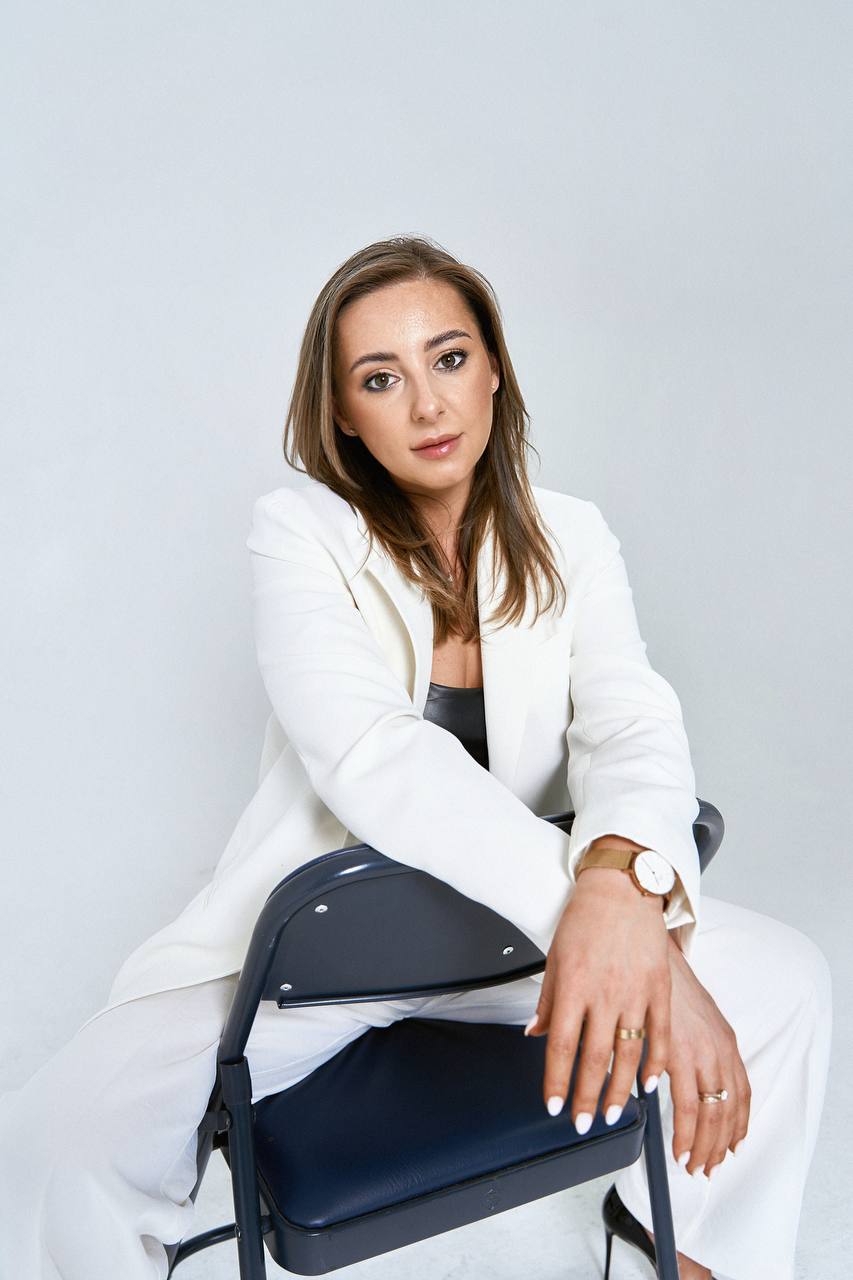
What principles are fundamental to you in your work?
For me, the foundation of a high-quality beauty service is safety, professional knowledge, precision, an individual approach, and continuous development. I have never viewed beauty as a profession based on following one memorized algorithm, because behind every beautiful result there must be an understanding of what you are doing and why. You have to take into account the client’s skin type, natural features, the condition of the hairs, facial proportions, expectations, and many other details. This is especially important in permanent makeup, where there is no universal shape or technique that will work equally well for everyone. A professional needs to see not just the individual procedure, but the person as a whole and create a solution specifically for them. I have been working in beauty for about eight years, but I still continue to study regularly, learn new techniques, and keep up with products, technologies, and industry trends.
You work across several areas: Permanent Makeup, Eyelash Extensions, Lash Lift, and Brow Lamination. How did you come to combine all of these professionally?
I do work across all of these areas, but I do not see them as completely separate professions. To me, they are interconnected beauty disciplines that complement one another and allow me to work with a client’s appearance more comprehensively. Working with brows, lashes, and permanent makeup requires an understanding of facial proportions, shape, color, symmetry, and how individual elements influence the overall appearance. That is why knowledge in one area helps me become stronger in another. Each discipline requires its own knowledge, practice, and continuous education, so I consciously focus on areas that are closely connected and where I can continue deepening my expertise.
Another important part of your work is educating other beauty professionals. When did you realize that you were ready to share your knowledge and experience?
It actually took me quite a long time to get there, and at first I was not even sure that I had the right to teach others. I clearly remember the first two women who asked me to teach them eyelash extensions. I turned them down and even recommended that they contact the artist who had originally trained me. But after years of practice, continuous education, and working with a large number of clients, I eventually felt ready to share my experience. I developed my own course curriculum and began training new professionals. My first one-on-one course was very exciting for me, but I was not worried about myself; I was worried about the student. I wanted her to understand the material and leave the training feeling confident in herself. That was when I fully realized that teaching was not simply another area of my work, but a significant professional responsibility.

Do you have any proprietary techniques or approaches that you particularly stand by in your work and teaching?
I would not describe it as one specific proprietary technique. For me, my educational system is primarily about a particular approach to the learning process itself. Yes, the course begins with theory, but I always emphasize to my students that practice is the foundation of the beauty profession, which is why working with live models begins on the very first day. I do not expect a perfect result from the first attempt, and I allow students to make mistakes because that is often how they understand best what went wrong. When a problem occurs, I do not simply point it out; I show them how to correct it and how to avoid making the same mistake next time. It is important to me that a student does not mechanically memorize a technique, but learns to analyze their own work independently and make professional decisions. My training also does not end when the certificate is issued: I stay in touch, and students can always reach out with a question, a challenging case, or a request for professional advice. To me, a good educator is someone who provides not only information, but also practice, confidence, and the understanding that after completing the course, you are not left alone to figure out the profession by yourself.
Viktoriia, how much has your approach to your work changed since entering the American market?
Without a doubt, over the years, it is not only my technique or approach to clients that has changed – I have changed as a professional, too. At first, I was primarily focused on technique and the quality of the procedure, but over time I realized that being a beauty professional means much more. The American market taught me to think more broadly: to pay attention to service, communication, personal branding, and the client’s overall experience. I began to see myself not only as a beauty professional, but also as an entrepreneur responsible for developing my own brand and earning my clients’ trust. At the same time, I learned to remain open to new techniques and trends without simply copying everything that becomes popular. Instead, I first analyze whether something truly fits my work and professional philosophy. Today, I understand that a successful beauty business is a combination of expertise, service, continuous development, and the right attitude toward people. That is exactly the mindset I try to pass on to my students.