

Interview by: Alina Fartushna
The first years of a child’s life are a time when the foundations of communication, interaction with the world, and further development are established. That is why it is important not simply to look for individual exercises to encourage a child’s first words, but to understand which skills precede speech development and how parents can support them in everyday life. Alona Kindyk is an educator, an early childhood development and speech development specialist, and the creator of the “Speech Secrets” system, with professional training in neuropsychology. Her online program has already brought together more than 800 mothers from different countries. Today, “Speech Secrets” is a system that helps parents integrate speech development into ordinary everyday situations. Alona is currently adapting her methodology for an English-speaking audience and developing it for the American market.
alyona.kindyk@gmail.com

Alona, tell us about your professional journey: what led you specifically to the field of early childhood development and speech?
My professional journey began with an education in languages and pedagogy. In 2012, I graduated from Bohdan Khmelnytsky Cherkasy National University with a degree in English Language and Literature / Linguistics. When I was 20, I went to Austria through the Au Pair program and worked as a nanny and educator for a family with two children. It was there that I first encountered early childhood development up close: one of the boys was almost nonverbal at the age of two. I began observing him, looking for ways to interact with him, and exploring how an adult can support speech development. After my son was born, this interest became even deeper. I continued studying child development and neuropsychology and gradually developed my own professional approach. Speech development became a particularly important part of my work because the phrase “a child doesn’t speak” can reflect very different developmental characteristics. It is important to me not simply to give parents exercises, but to help them understand their child and support communication every day. This is how my main professional focus emerged – early childhood development from the first months of life to the age of three, with a focus on communication and speech. Based on this experience, I created my own online program, “Speech Secrets: The Path to a Child’s First Words and Phrases,” which has already been completed by around 800 mothers.
You work with children from birth to age three – a period that is increasingly recognized today as fundamental to later development. What are the most common mistakes or challenges you observe among parents who want to support their child’s speech development between the ages of 0 and 3?
I would say that the main problem for parents is not that they do too little with their child. On the contrary, many mothers today want to help so much that they do too much, but not always what their particular child actually needs. One of the most common mistakes is treating speech development as a set of exercises while overlooking the basics: Does the child want to communicate? Do they initiate interaction? Do they use gestures, sounds, and eye contact? Do they understand spoken language? Parents also often speak for their child, anticipate all of their needs, or compare them with other children, focusing only on the age at which the first words appear. On top of that, there is an enormous amount of contradictory information online, which often leaves mothers unsure of what exactly to do and feeling guilty that they are not doing enough. But perhaps the most difficult part is parental anxiety. Behind the words “my child doesn’t speak” there is often a fear: “What if I missed something?” or “What if something is wrong with my child?” That is why my approach is not to make parents do even more, but first to calmly understand what stage of development the child is at, which skills have already developed, and what needs support. Then we build a simple system that can realistically be used every day. For me, speech development is not an hour of sitting at a table and doing exercises, but play, a walk, mealtimes, bathing, reading, and an ordinary conversation with mom. Our goal is not to force a child to speak, but to create conditions in which they have the desire and opportunity to communicate.
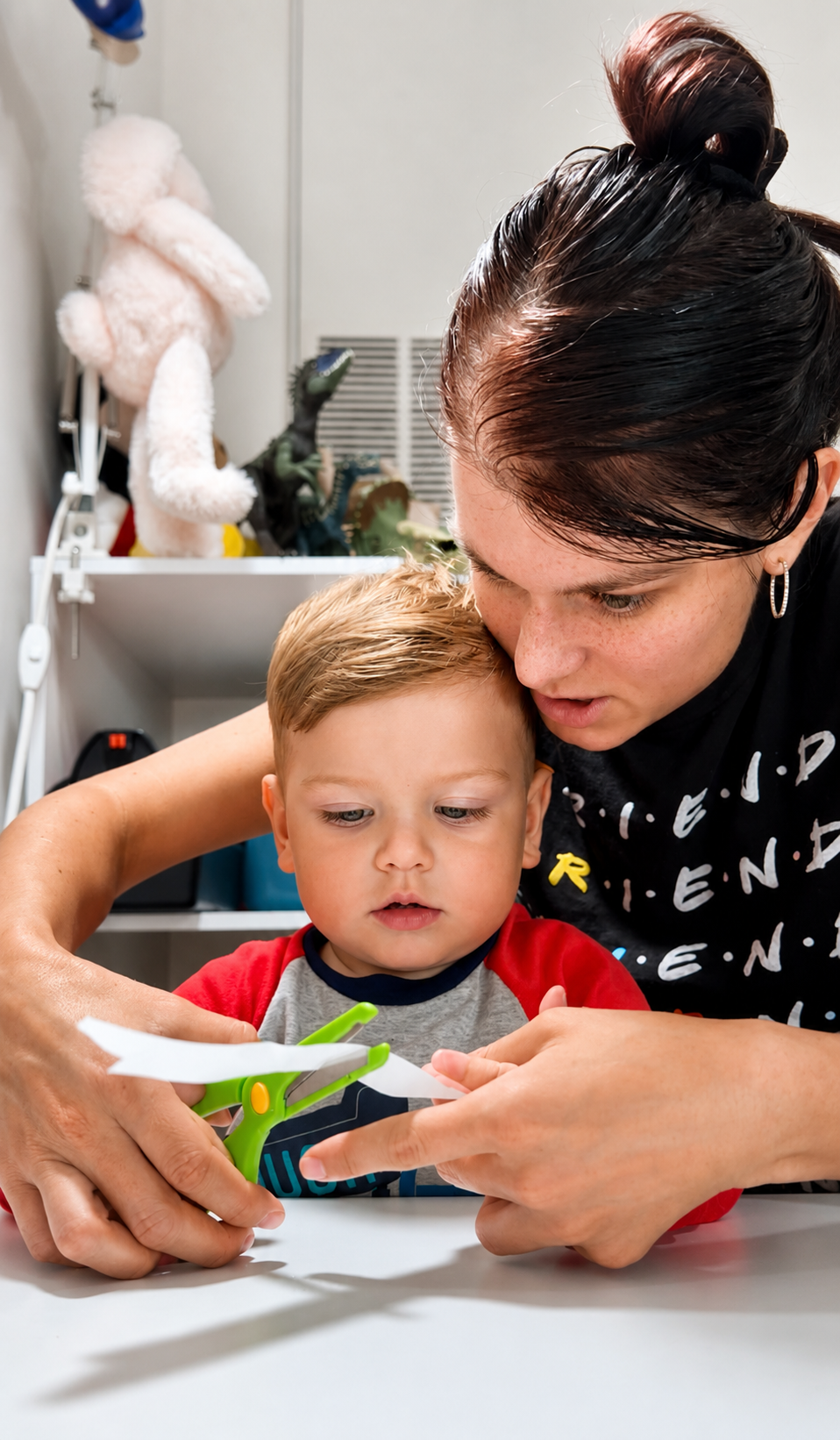
You are the creator of the “Speech Secrets” system, which has already been completed by more than 800 mothers. What inspired you to create a system rather than simply another collection of speech development exercises? Who is your audience today, and which countries do families reach out to you from?
The idea for “Speech Secrets” came from a very specific request that I heard from parents again and again: “My child doesn’t speak. I want to help, but I don’t know what exactly to do at home.” I saw how strongly mothers wanted to help their children while at the same time feeling lost among the enormous amount of information, exercises, and recommendations. That is why I wanted to create not another list of games, but a system that helps parents understand what is happening with their child’s speech, which skills form its foundation, and what exactly they can do every day. I structured my knowledge and practical experience into a program for children from five months to three years old – “Speech Secrets: The Path to First Words and Phrases.” It was essential for me that mothers would not have to turn the entire day into a series of lessons, because everyday life itself can become an opportunity to develop communication. At the same time, I do not give every child the same algorithm. First, it is important to understand what stage your particular child is at and then choose the appropriate tools. The program has gradually evolved together with the families who have taken it: I collected feedback, saw where mothers needed additional explanations, and improved the system. Today, more than 800 mothers have completed “Speech Secrets,” with a significant part of my audience being Ukrainian families living abroad, particularly in the United States, Canada, the UAE, and European countries. That is why the online format is especially valuable to me: a mother can receive knowledge and tools in Ukrainian regardless of which country her family lives in. I call it a system because it is important not simply to receive information, but to understand what to do, in what order, and how to integrate it into real life.
If you were to explain it to parents as simply as possible, how is “Speech Secrets” different from a set of speech therapy exercises that can be found online? What specific principles form the foundation of your system?
“Speech Secrets” is not a set of speech therapy exercises, nor is it an attempt to replace the work of a speech therapist at home. It is a system for organizing everyday interaction with a child. I suggest beginning to support speech development much earlier, rather than waiting until a problem becomes obvious, and making parents active participants in the process. One of the key principles is moving speech stimulation into everyday life: play, walks, meals, bathing, reading, and daily routines. I also do not look at speech in isolation, but in the context of a child’s overall development and communication skills. It is also important that a mother receives not a chaotic list of dozens of exercises, but a clear sequence of actions, can track progress, and understand when changing her own interaction is enough and when it is already time to consult a specialist.

What principles and elements have you incorporated into your system that distinguish it from traditional approaches to speech development?
I built “Speech Secrets” around several interconnected principles: an early start, developing speech through everyday interaction, an individual starting point, and systematic observation of the child. It is important to me that parents do not wait for the first words, but understand that speech development begins much earlier through contact, joint attention, gestures, imitation, and comprehension of spoken language. A special place is given to a speech development journal, which helps parents record new skills and observe progress without attempting to diagnose their child themselves. Another principle is consistency instead of chaotic exercises: a mother should understand exactly what she is doing, why she is doing it, and which skill she is supporting. It is also very important to me to consider the mother’s own state, because my goal is not to create another list of responsibilities for her, but to provide simple tools that can realistically become part of family life.
Why did you choose the format of short daily activities that can be integrated into everyday family life? What advantages of this approach do you observe in your practice?
Because they correspond to real family life: a mother has work, household responsibilities, other children, and her own needs, while a young child cannot remain in a structured learning mode for long. It is important to me that development does not compete with family life but becomes part of it, which is why short activities can continue during play, walks, meals, or everyday tasks. This format provides consistency, reduces stress for the child, and helps mothers notice developmental opportunities in situations they previously overlooked. Another important advantage is less guilt, because a mother does not have to create a perfect “learning day” that she will not be able to maintain for long. For me, a good approach is one that a mother can genuinely follow the next day, the following week, and the following month.
Alona, one of the important features of your approach is active parental involvement. How important is it not simply to work with the child, but to teach the mother or father how to interact with them specifically to stimulate speech? What role do parents play in your system?
For me, parental involvement is not an additional advantage of my system – it is its foundation. A child between 0 and 3 spends most of their time with their parents, so it is important not simply to “work with the child,” but to understand how to interact with them correctly. Parents create a language-rich environment, notice the child’s initiatives, respond to their gaze, gesture, or sound, and give them the opportunity to communicate independently. They also observe developmental progress using the speech journal, but they do not diagnose; they simply notice signals in time when a specialist may be needed. It is important to me that the knowledge they gain is transferred into everyday life: play, walks, meals, reading, or bathing, rather than turning every interaction into a lesson. I want a mother to gradually move from “I don’t know what to do about my child’s speech” to “I understand my child and know how I can support them today.” That is why parents in my system are not people simply completing homework assignments, but active participants in their child’s development who gain enough understanding and tools to support their child every day while also understanding the limits of their own expertise.

Can you share what results you have observed in children after working with the program? How do you collect feedback from participants and evaluate the results of your work?
I evaluate my work not only through mothers’ impressions, but primarily through changes in interaction with the child and in the child’s communication. After the program, I collect feedback through questionnaires and compare the situation before and after the program: vocabulary, communication initiative, the emergence of new words, new ways of interacting, and speech structures. Mothers most often reported an increase in vocabulary, the emergence of new words, more active imitation, and more active use of speech. For example, in one case, a child went from approximately 20 words or sound combinations to more than 50. At the same time, I deliberately do not call these results a clinical study – they are parents’ self-reports about changes they observed in their children. It is also important to me that participants highlight the practicality of the system and say that after completing the program they understand their child better. Going forward, I want to collect more structured data and track developmental progress more systematically.
You are currently adapting your system for an English-speaking audience. What remains unchanged in your professional approach, and what needs to be adapted to the American cultural and educational context?
For me, adapting “Speech Secrets” for an English-speaking audience is not simply a matter of translating the materials, but of preserving the logic of the system while taking into account the specific characteristics of American families. The main principle remains unchanged: speech develops primarily through everyday interaction, so the foundation continues to be an early start, consistency, an active parental role, and an approach tailored to the needs of the individual child. At the same time, I am adapting examples, games, everyday situations, and recommendations to the American context, particularly given the large number of bilingual and multicultural families. It is important to me that parents do not perceive bilingualism as an obstacle to speech development, but understand how to create a high-quality language environment in multiple languages. I also take into account how American parents interact with pediatricians, speech-language pathologists, and other specialists. My system does not replace professional diagnosis or therapy; rather, it helps parents support their child’s development every day and recognize in time the signals that indicate when it is worth consulting a specialist.
Alona, what problem among American parents do you want to address through your system, and which aspects of your Ukrainian professional experience do you consider valuable for an English-speaking audience?
In the American market, I want to address a problem familiar to many modern parents: they want to support their child’s development, but do not always understand how to do this systematically in everyday life. There is a great deal of information available, but there is often a significant gap between knowing what is beneficial for speech development and knowing what specific actions a family can take every day. I want to give parents a clear system: what to observe, how to interact, what communication opportunities to create throughout the day, and how to track progress. From my Ukrainian experience, I value practicality, consistency, and active parental involvement the most, because from the very beginning I designed my program so that it could be applied at home without complicated equipment. At the same time, I do not want to simply transfer the Ukrainian approach into the American environment. Instead, I combine what works well in practice with the needs of the modern English-speaking family.

What do you see as the next stages in the development of your professional work?
The next stage for me is moving from working primarily with a Ukrainian-speaking audience toward the international development of my system. First and foremost, I want to fully adapt “Speech Secrets” for English-speaking families, not simply translating the materials, but testing how the system works in a different cultural and linguistic environment. At the same time, I plan to improve observation tools, progress tracking, and materials for parents, as well as develop professional partnerships with speech-language pathologists, early childhood development specialists, and educational organizations. Another important area for me is studying the program’s results more systematically. More than 800 mothers have already completed “Speech Secrets,” and I want to turn the accumulated experience into structured data. In the long term, I see “Speech Secrets” not simply as an online program, but as a comprehensive proprietary early speech-development support system that can be valuable both to parents and to the professional community.