
True strength begins where the need to live up to other people’s expectations ends. Veronika Su is a woman who embodies this idea. Her life in the United States, professional journey, and passion for fields traditionally considered “unfeminine” have never been about proving anything to others, but rather about getting to know herself better. Shooting, tactical training, endurance, sports, and constant forward movement are different expressions of the same inner position: not allowing stereotypes to define who you should be. Today, Veronika speaks about personal growth, freedom of choice, and the courage to find your own path even when it looks nothing like anyone else’s.
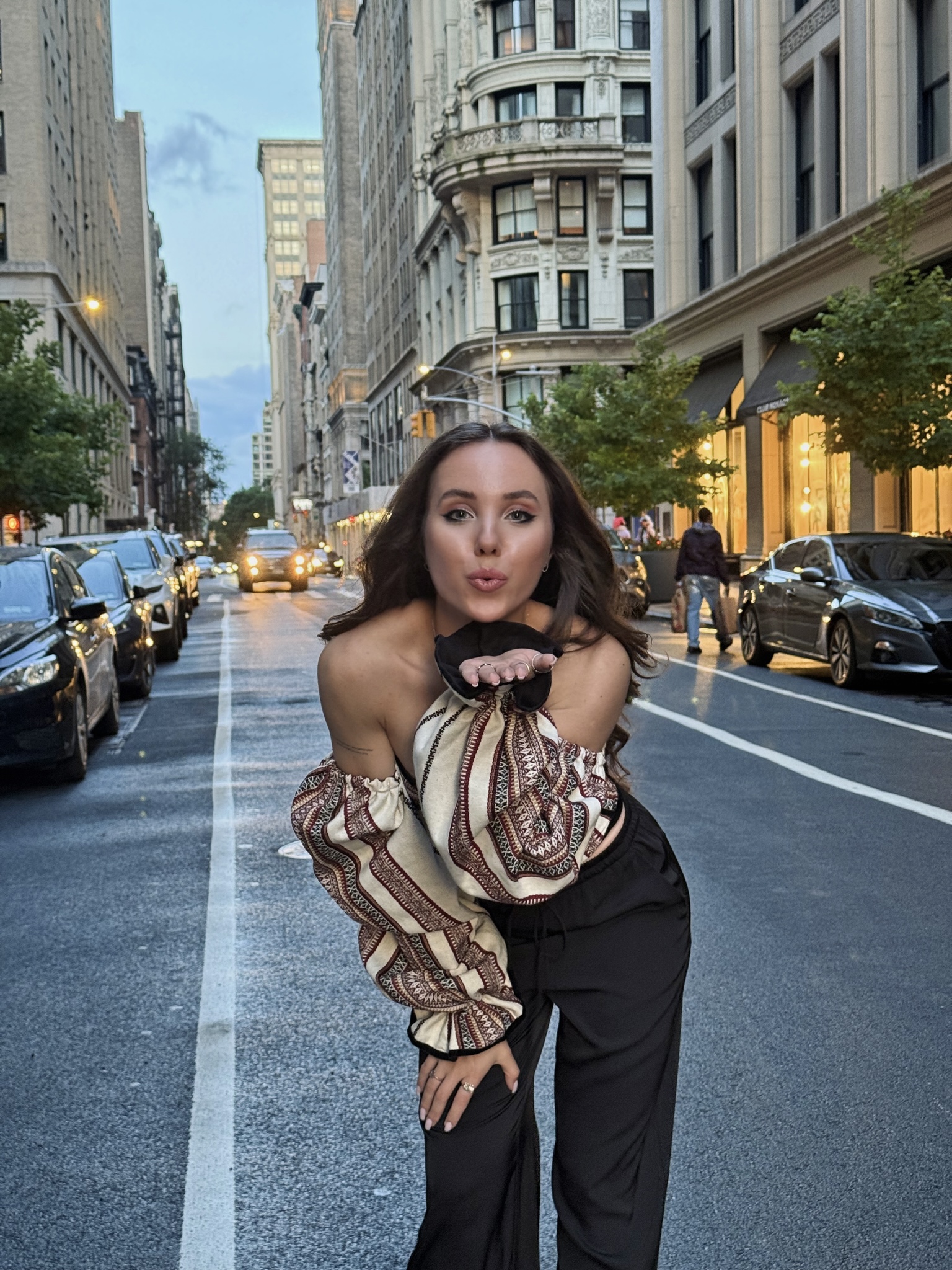
Veronika, if someone asked you today to describe yourself in a few words, how would you see yourself? What has remained unchanged, and what has changed dramatically over the past few years?
I would say that today I understand much better who I am and what I want, and I am no longer afraid of changing. Perhaps that has become the main sign of growing up for me — learning to stop holding on to a certain version of yourself simply because other people are used to seeing you that way. At the same time, there are things in me that have always been there: resilience, curiosity, versatility, and a certain restlessness. I love learning, trying new things, and I am not very good at stopping when I feel that there is still something interesting ahead. I have also learned to trust that not everything needs to be controlled and to let things go. Not in the sense of “I don’t care,” but in the sense that if something does not work out, I no longer see it as the end of the story.
You often speak about the importance of finding something that is truly your own and not being afraid that someone will say, “That’s not for you.” Where did this inner freedom to be different come from?
I think that feeling was already inside me when I was a child. Perhaps back then people called it stubbornness, but I always had my own idea of what interested me, and I never really understood why you should do something simply because everyone else does it. As an adult, I realized that being yourself is not just a personality trait — it is also taking responsibility for your own choices, and psychology helped me a lot with that. It taught me to better understand my boundaries, desires, and why we sometimes adapt to other people’s expectations while gradually losing ourselves. I even have a tattoo with the phrase: “You are not here to live up to anyone’s expectations.” For me, it is not about selfishness or indifference toward others, but about the freedom to be different, to try, make mistakes, and change direction without taking away other people’s right to their own emotions and choices.
Veronika, you currently live in the United States. What has American society given you that you may have been missing before?
More than anything, America has given me the feeling that there is no single “correct” timeline in life. You can change careers, go back to school, move somewhere else, or start a new chapter at any age, and it is not perceived as being too late. I especially felt this at a university in New York, where some of my classmates were around 65–70 years old and had simply decided to pursue a new education. After eleven years of living here and working in different fields, including the legal field, I have learned to adapt to situations more easily. In America, the ability to stand up for yourself has become an integral part of life. It helped me develop one of my strongest skills: finding and using information. (Now my friends sometimes even joke that I have become like ChatGPT.)
Your professional journey is connected to fields that many people still perceive as predominantly male. What originally brought you to shooting and tactical training?
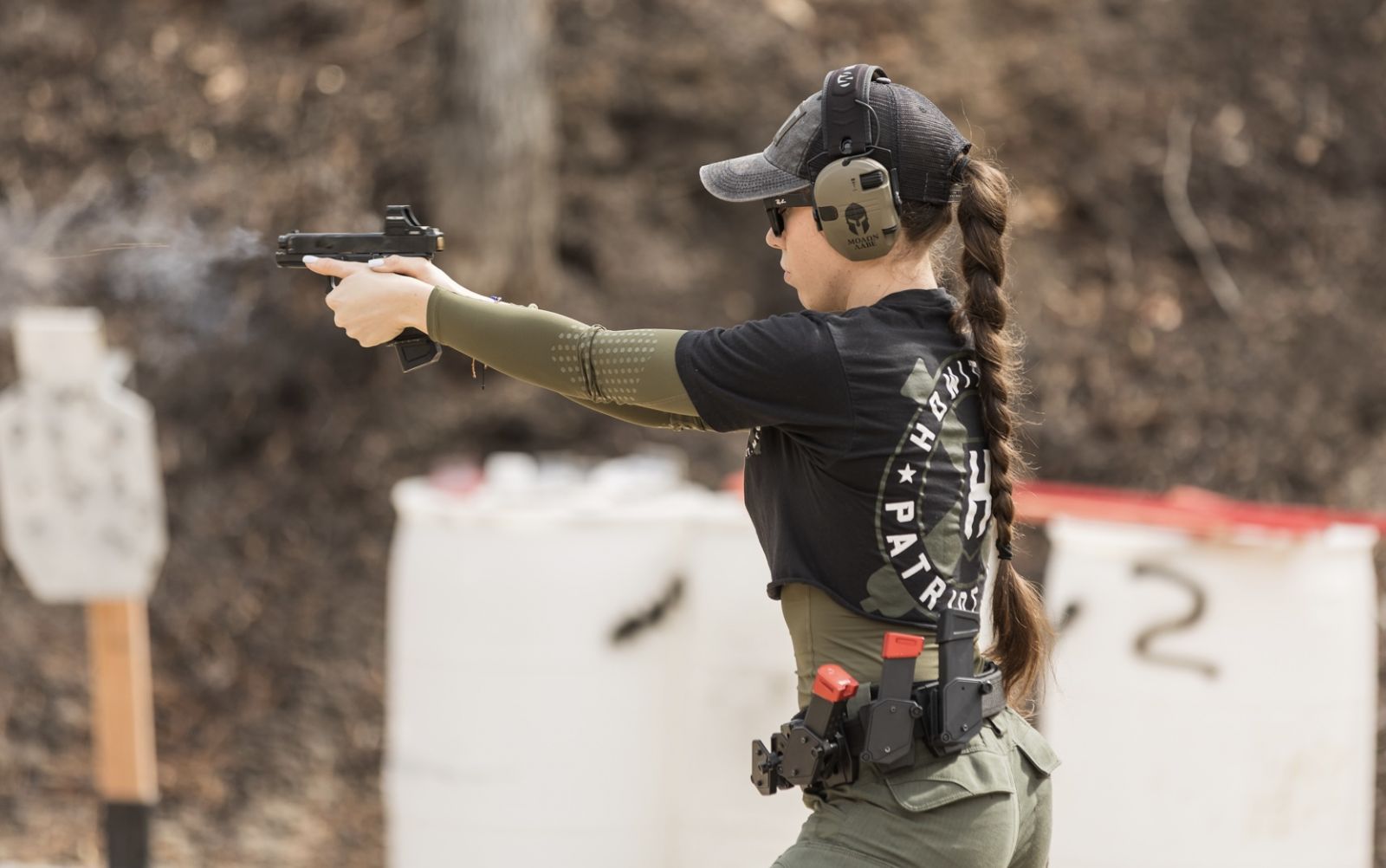
At first, I was simply attracted to shooting itself and to the possibility of owning a firearm in the United States. But quite quickly I realized that having good equipment does not mean knowing how to use it, so my first goal was to learn how to handle firearms correctly, safely, and professionally. I began training with an instructor — Lionel Giron, the founder of the New Jersey Sharpshooters club — and gradually the training became much more serious, almost resembling military-style preparation. That was when I realized how much I enjoyed this sport. Shooting very quickly shows whether you know how to stay present in the moment: during an exercise, all unnecessary thoughts disappear, and only the task, movement, and control remain. For me, it became about much more than shooting — it became a way to develop focus, endurance, and discipline. And I like the fact that there is always room to grow.
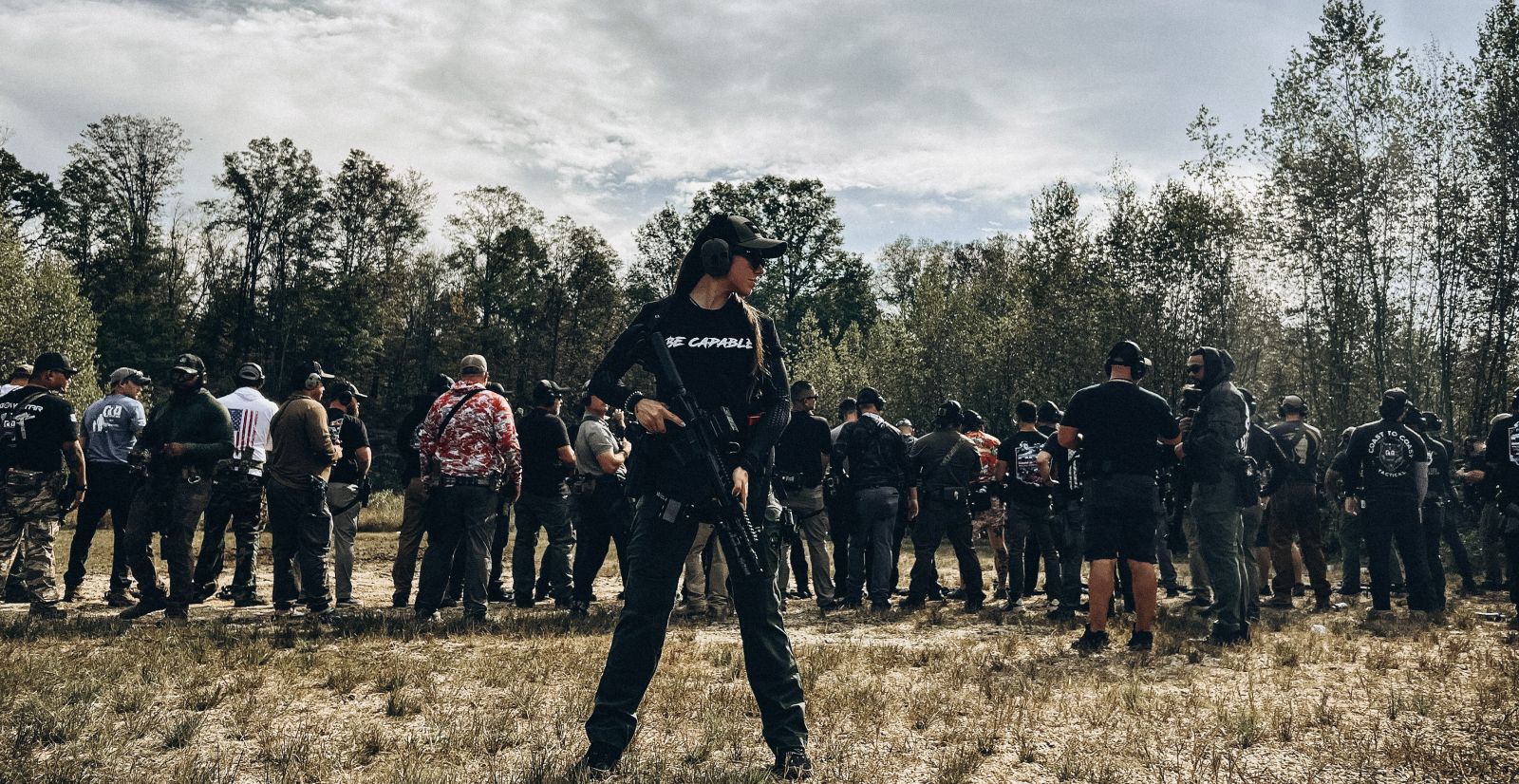
Veronika, you became the first woman to receive a Man Card at Ohio Range Day and later made the Top 5 in the Microinfluencer of the Year category at the Gundie’s Awards. What did these two recognitions mean to you?
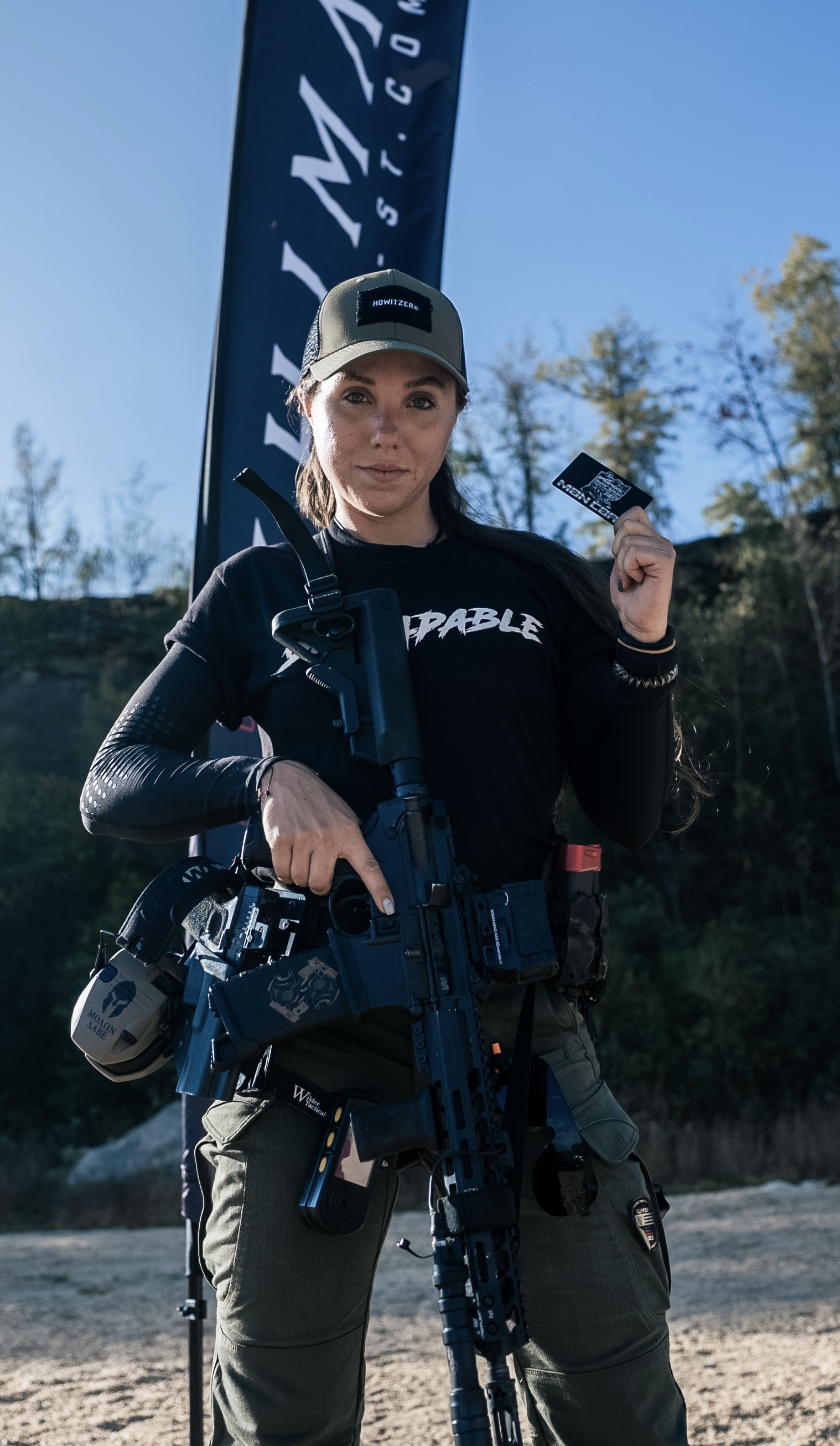
For those who are not familiar with the shooting community, Ohio Range Day and the Man Card Drill by Achillies Hill Tactical are challenges where participants have to complete a series of shots within a set time limit while performing under the pressure of a large crowd. During the six years that the event has existed, I became the first woman to receive a Man Card, although I initially went there simply for a new experience and an opportunity to test my own limits. At the same time, I was preparing for a 50-kilometer Spartan Race with 60 obstacles in Vermont. For me, the Man Card was the result of training, mistakes, physical preparation, and work that usually no one sees. The Gundie’s Awards nomination was another confirmation that this journey had become visible to the professional community. The Gundie’s Awards are essentially the “Grammys” of the shooting world, and the Microinfluencer of the Year category was introduced that very year. When I saw my name among the Top 5, I truly realized for the first time how much can change in a relatively short period of time and that my experience could already serve as an example for someone else. I do not see these achievements as proof that I can do something “male,” because I do not like dividing abilities into male and female. To me, it is about having the right to take your place wherever you are interested, constantly becoming better than the person you were yesterday, and perhaps inspiring others. Someone once told me, “Keep going. You never know who you might inspire,” and I think that is much more important than any award. If your story has helped someone believe in themselves, try something new, or not give up, that is already a real impact.


If you met a young woman today who really wanted to try something new but was afraid of being judged by her parents, partner, friends, or society, what would you tell her?
First, I would ask how old she is, because it is important to understand how independent she already is when it comes to making decisions. The opinions of people close to us are worth listening to and respecting, but that does not mean giving up your own voice. If the person is already independent, I would ask her: do you genuinely not want to do this, or are you simply afraid of how other people will react? If it is your dream and you understand why you need it, I would say: try. I personally follow the 51% rule: if one option outweighs another by even one percent, that is already enough reason to take the first step. I would rather try and, if I realize it is not for me, change direction. Then I will have experience rather than simply thoughts about what could have been. Sometimes it is worth imagining yourself at 80 or 90 years old and asking: what would I regret more — trying and discovering that it was not for me, or never giving myself the chance at all? The same principle applies to relationships: we should give each other the freedom to make our own decisions, make mistakes, and live our own lives.