Interview by: Alina Fartushna
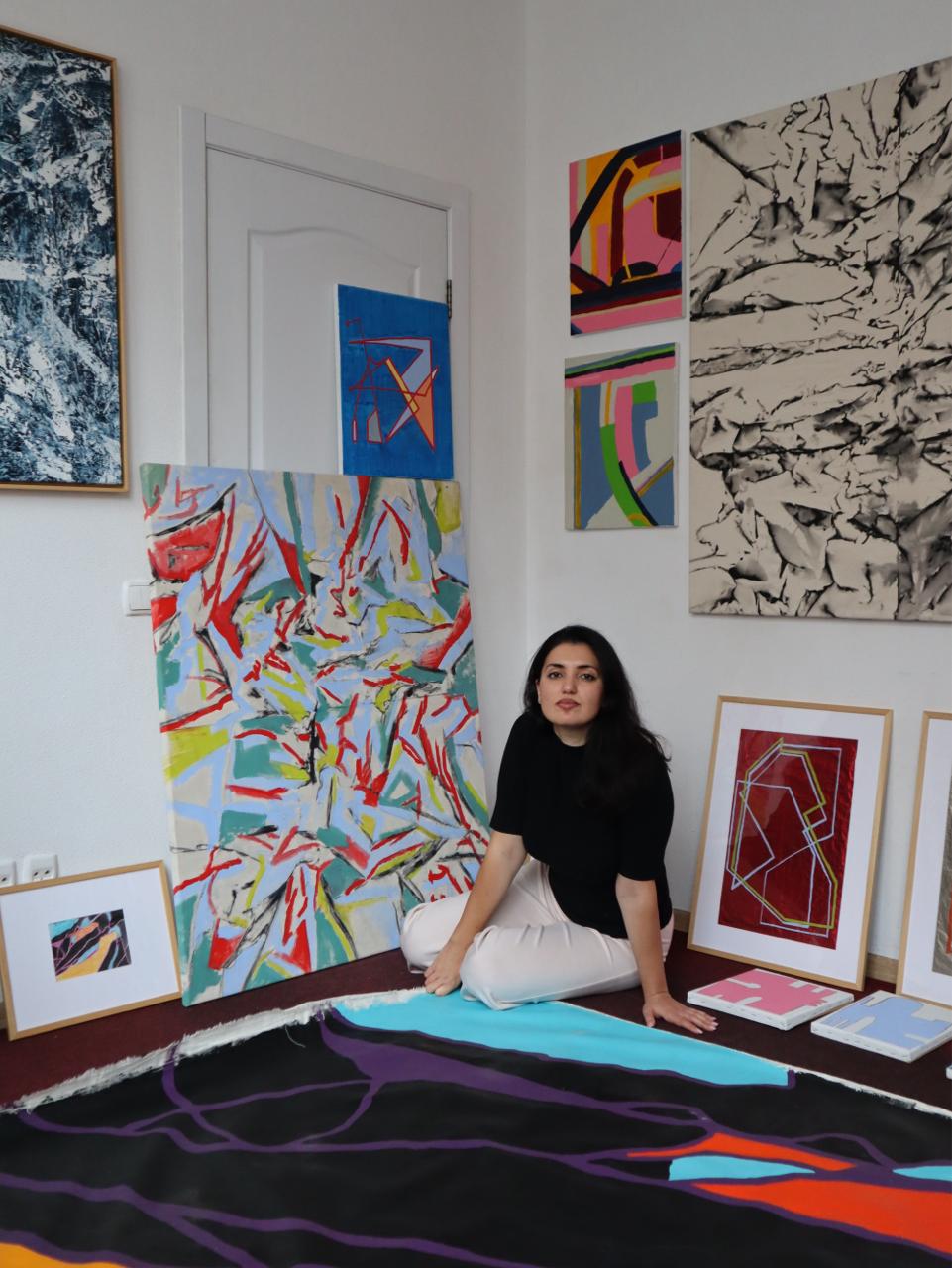
In contemporary art, increasing value is placed on artists who do more than create aesthetic images — they develop new ways of understanding the world. Gayane Arushanian is one of them: a multidisciplinary artist whose practice moves between painting, sculpture, spatial objects, and conceptual art. Her work is grounded in an in-depth exploration of patterns, structures, and mathematical models, transforming complex scientific concepts into accessible visual forms. Today, her work has been presented at international exhibitions, while her original projects continue to attract the attention of the professional art community.
instagram.com/gaya.arushanian.art
Gayane, many of your projects are based on the study of patterns, structures, and mathematical models. What was the starting point for this unusual intersection of art and science?
From the very beginning of my professional artistic journey, I had a strong artistic foundation. I graduated from art school, where I worked extensively with painting and regularly participated in exhibitions. At the same time, I was interested not only in creating but also in analyzing, which led me to study economic cybernetics and later work with mathematical models, statistics, and data analysis. My thesis was devoted to a mathematical model of a region. I realized that I genuinely enjoyed studying systems, patterns, and interconnections, but at the same time, I understood that working in an office environment felt too limiting for me. So I also explored design, and after graduating in 2012, I founded my own art studio. This combination of experiences gradually shaped the way I think as an artist: I began noticing that behind familiar visual forms there are structures and mathematical patterns that can be translated into art. Today, science in my work is not a separate direction or a decorative element — it is part of the way I see the world. I brought the analytical thinking I developed through my studies into my artistic practice.
You founded your own art studio in Ukraine back in 2012. What did that experience give you, both as an artist and as an entrepreneur?
The idea of opening my own art studio came toward the end of my studies, in 2012, when I realized that I didn’t want to work exclusively in the economic field or spend my days in an office. At the time, I was working in graphic design, while my background in economic cybernetics had given me an understanding of finance, management, and the overall structure of a business. I decided to bring those two worlds together and create my own space. The idea itself was literally born in a kitchen in Zaporizhzhia, together with my sister. By June 2012, I had made a clear decision: it would be an art studio where I could combine art, design, working with people, and entrepreneurship. That experience taught me a great deal because I began to see art not only as a form of self-expression, but also as a system that can be developed, organized, and scaled. Later, I sold my studio in Zaporizhzhia, moved to Kyiv, and opened the School of Experimental Art there. I decided to focus on developing the School of Experimental Art, my own artistic practice, and my professional growth on an international level.
One of your best-known original projects is “Factorials.” Tell us about its concept. What ideas did you want to communicate to the viewer?
“Factorials” is my artistic exploration of how changing a single element can affect an entire system. I wanted to present a mathematical principle not through a formula, but through physical interaction. Each interactive paper sculpture consists of n elements that differ in shape, size, and visual characteristics, so changing just one of them transforms the entire composition. For example, if a sculpture consists of six elements, there are 720 possible ways to rearrange them, because 6! = 720. This demonstrates very clearly how quickly the complexity of a system can grow even when the number of components is relatively small. What matters to me about this work is that the mathematical model becomes understandable through the viewer’s own experience: you change one element and immediately see the effect on the whole. At the same time, the work is no longer only about mathematics. The same principle can be observed in nature, society, political processes, or ecosystems, where even a small change in one component can trigger much larger transformations. For me, “Factorials” is a way of using art to explore interdependence, influence, and the complexity of the systems we all exist within.
Your work encourages an intellectual dialogue. How important is it for you that viewers leave your work with more questions than ready-made answers?
It is extremely important to me because I don’t want to dictate what a person is supposed to see in my work. The way a viewer experiences art is already their own interpretation, and I really value that dialogue. I can communicate my state of mind through a work — something I felt or understood — but from that point on, the artwork begins to exist independently of me. I want people to look at my work and perhaps see something broader: the world, themselves, a particular situation, or even their own emotions. If new questions emerge after that encounter, then for me, the dialogue has happened.
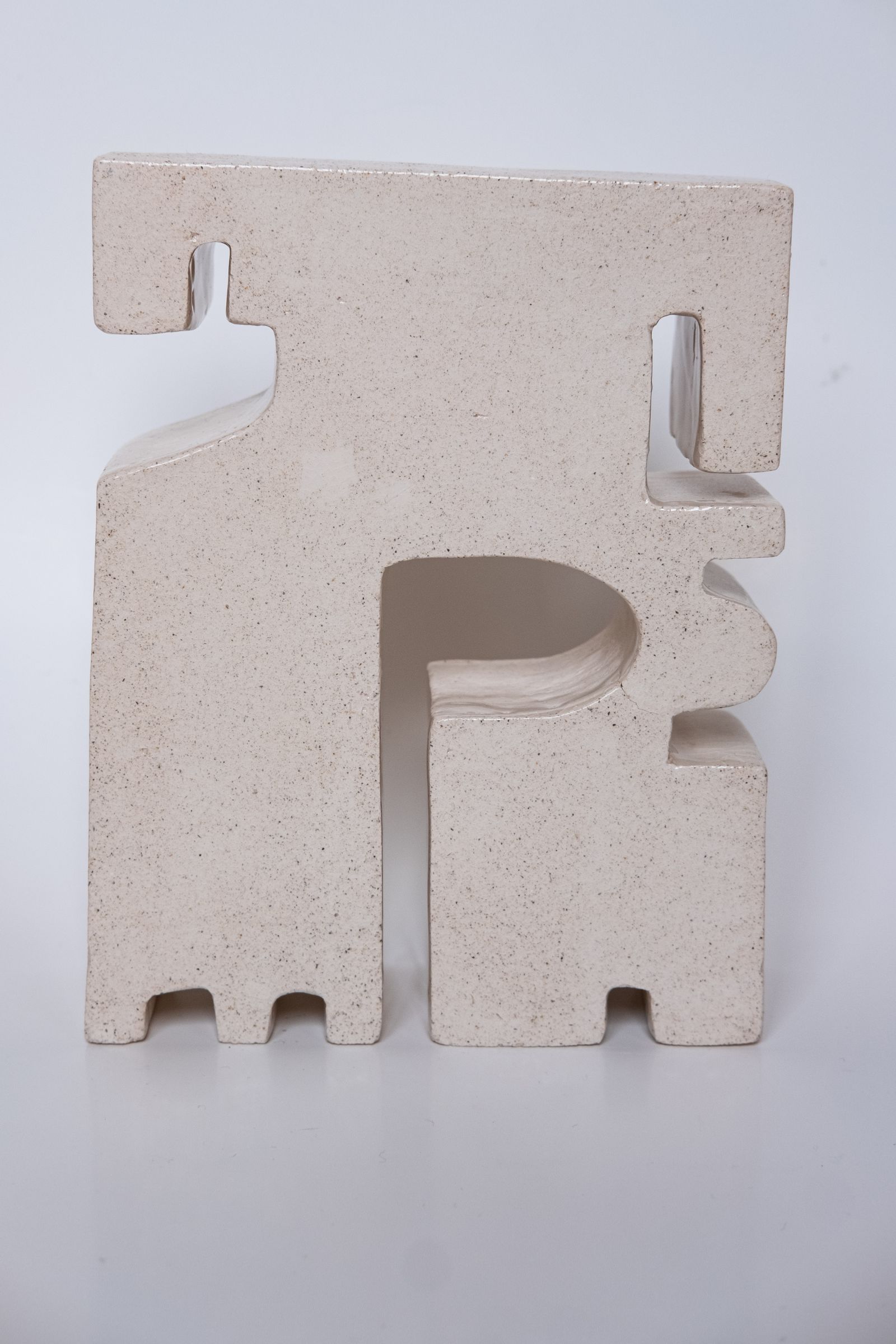
Gayane, a special place in your creative practice is occupied by your Abstract Animals sculpture series. What ideas are at the heart of this project?
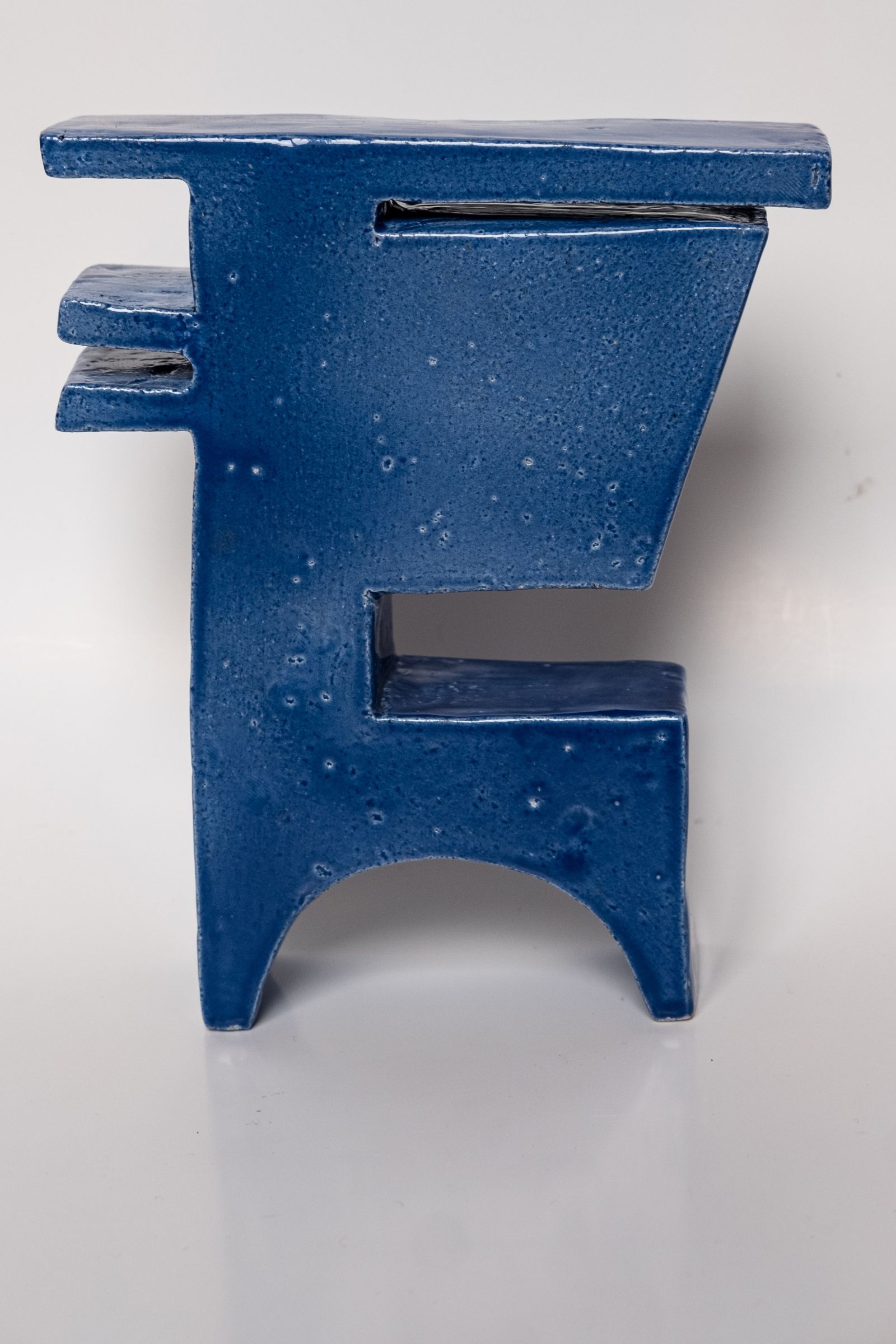
For me, Abstract Animals is an exploration of the very force of life through the image of an animal. I’m interested in the universal instinct inherent in all living things: to survive, adapt, change, and continue evolving. In each sculpture, I try to bring this complexity together in a single form, where strength and elegance, defined structure and organic fluidity can exist simultaneously. It is important to me that the viewer does not see a literal representation of a particular animal, but instead senses something beyond the form — an invisible geometry that, in my view, lies at the foundation of life itself. In this series, I combine precision with softness. For me, it is a way of showing that life is always in motion, constantly balancing between opposing forces.
Your work has been presented at international exhibitions and on professional art platforms. What does recognition from the international art community mean to you?
I started with competitions for emerging artists and group exhibitions in Ukraine. Over time, I moved toward solo projects, gallery exhibitions, and international open calls. Some important milestones for me included participating in projects organized by the Union of Young Artists in Ukraine, exhibitions in Kyiv and Lviv, a solo exhibition in Zaporizhzhia, a solo exhibition at the Mlyn Design Hub curatorial space, as well as international projects, including those connected with the Venice Biennale. After the full-scale war began, my work was presented in group exhibitions in London, Munich, Cambridge, and Chicago. In 2025, I participated in Context Art Miami during Miami Art Week with my sculpture Abstract Animal II. My work has also been exhibited in Miami galleries. For me, each of these projects is an opportunity to reach a new level of interaction with the international art community. Building relationships with collectors, curators, and gallerists is very important to me, so I see international visibility as a long-term professional journey rather than a one-time achievement.
Gayane, if you had to describe the central mission of your artistic practice in just a few sentences, what would you want to leave behind?
I would like my art to help people look at the world, at others, and most importantly, at themselves from a broader perspective. For me, art is a way of exploring truth, recognizing connections, and discovering what does not always exist on the surface. I want to continue developing, creating new work, and building relationships with people who feel the value of art in the same way. And if I speak about my biggest dream, I would love for my work to one day be represented by leading contemporary art institutions around the world. At the same time, it is important for me to remain a person for whom being an artist is not a title, but a way of experiencing, questioning, and exploring life.