
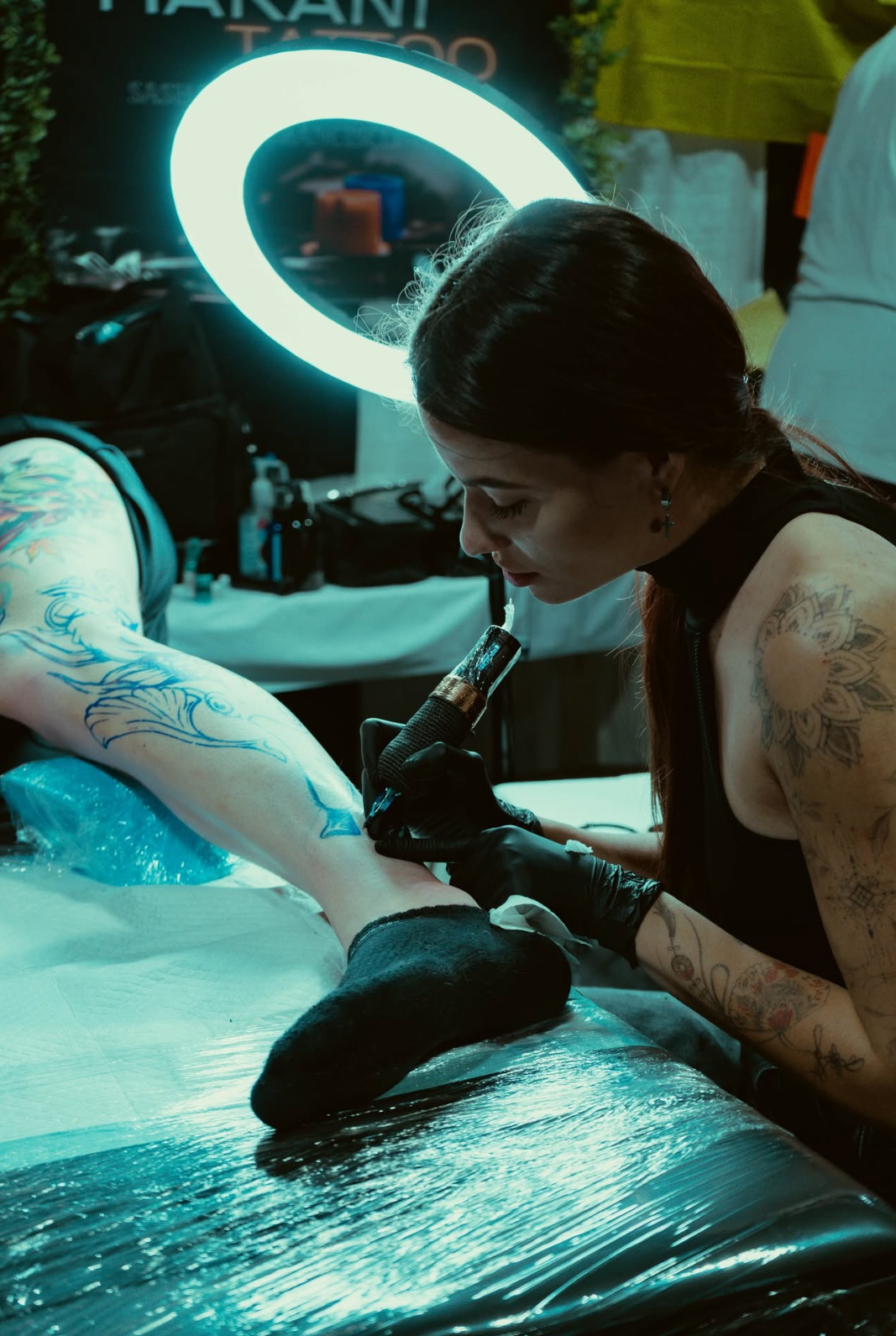
Karyna Pulcho is a professional tattoo artist with eight years of experience whose career spans Ukraine and the United States, including international tattoo conventions, professional awards, judging competitions, and teaching. A significant part of her professional practice is dedicated to complex cover-up work involving scars, burns, stretch marks, and other skin changes. This is a field where artistic skill is combined with an understanding of traumatized tissue and a particularly high level of responsibility toward people whose visible scars are often connected to deeply personal experiences. Working in the United States, particularly in Los Angeles and San Francisco, Karyna has developed an approach in which tattooing can be more than art, aesthetics, and self-expression—it can also help transform the way people perceive their bodies after injuries, burns, and surgeries. Another area of her expertise is artistic reconstruction and nipple-areola simulation following breast surgery, including after cancer treatment. Karyna also shares and systematizes her practical experience through professional and educational work. She is the author of a scientific article and an international educational guide for experienced tattoo artists focused on working with scars and complex skin changes. Today, Karyna continues to develop as an artist, practicing tattoo artist, educator, and judge of professional tattoo competitions.
Email: pulchokaryna@gmail.com
Instagram: Rakani_tattoo

Karyna, when did you realize that you wanted to work not only with tattoos, but also with the effects of injuries, surgeries, burns, and complex skin changes?
This direction developed gradually. I began receiving more and more clients with scars, burns, and postoperative skin changes, and at first I saw these projects primarily as a complex professional challenge. But over time, I began to notice how much the result could change a person’s relationship with their own body. Something they had wanted to hide for years no longer had to be the first thing they saw when they looked in the mirror. That was when I realized I wanted to develop this area more deeply.
What fundamentally sets working with scars, burns, and other altered skin apart from a regular tattoo?
A scar cannot be treated like ordinary skin. Scar tissue differs in structure, density, texture, and its response to pigment. You need to consider the type and age of the scar, its condition, and how it has healed. Sometimes the right decision for an artist is to refuse the procedure altogether or postpone it. The design itself is another important consideration: the artwork needs to be created specifically for the individual scar, taking its shape and location into account. It is not enough to simply be good at tattooing—you need to understand how altered skin behaves and clearly recognize the limits of your professional expertise.
Have you ever had a case that made you especially aware that your work was helping someone regain part of their sense of normalcy?
One of the most memorable cases involved a client who had survived a serious car accident. After fracturing two lumbar vertebrae, she underwent a complex surgery that left her with a large vertical scar on her back as well as a catheter scar. They caused not only aesthetic discomfort but also constantly reminded her of the accident. Even after medical examinations showed that everything was fine, she continued to mentally return to what she had experienced. After the cover-up, her perception of that part of her body changed. Instead of a constant reminder of the trauma, she now saw an image she had consciously chosen for herself. The scar does not physically disappear—we cannot erase the past, but we can change what a person sees today when they look at themselves.
And how can tattooing help “remove a trigger”?
I use this phrase carefully because tattooing is not psychotherapy and it does not erase a person’s experience, but it can change a visual association. If someone sees a scar every day and immediately remembers an accident, surgery, or burn, that part of the body can constantly bring them back to a particular moment in their life. After a cover-up, the first visual image becomes the tattoo—the image they consciously chose for themselves. The past remains part of their story, but it no longer necessarily has to be the first thing they see in the mirror.
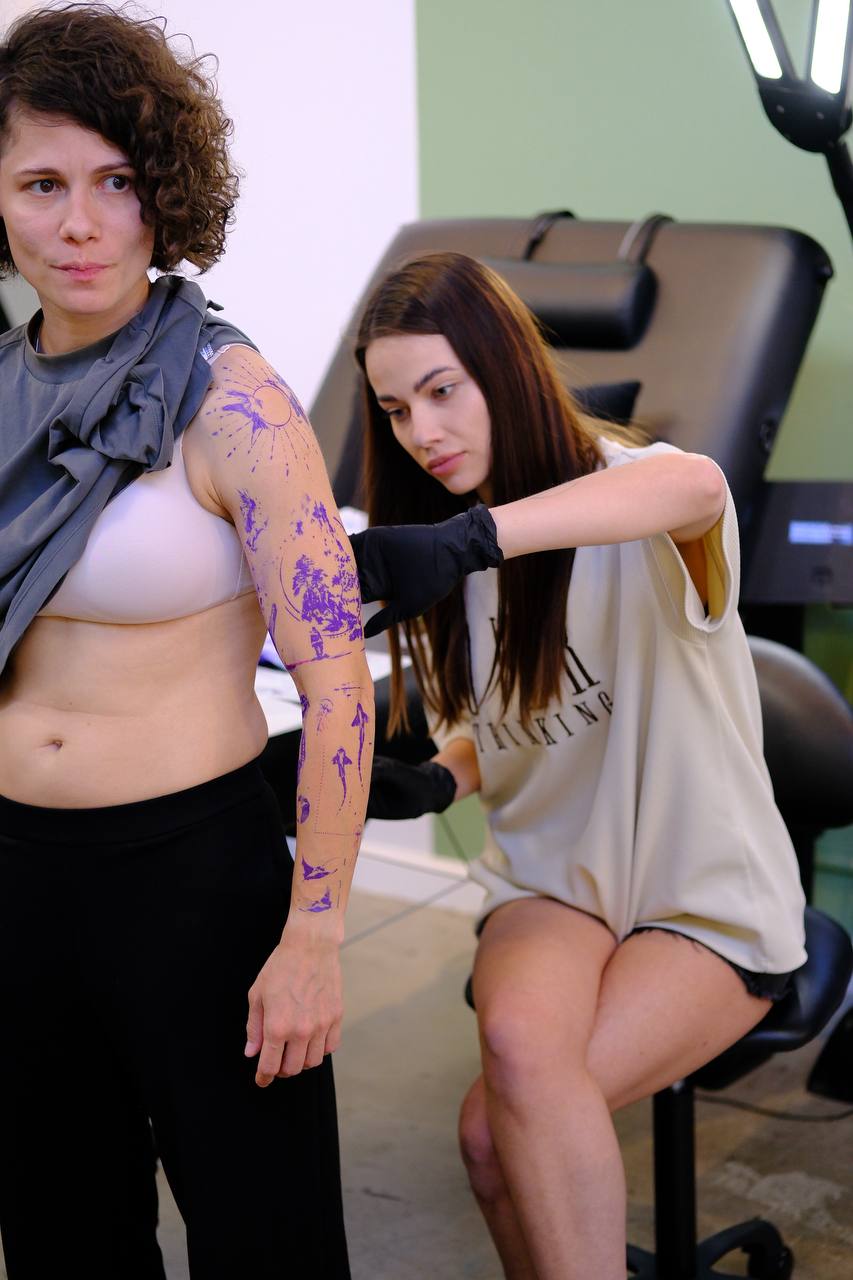
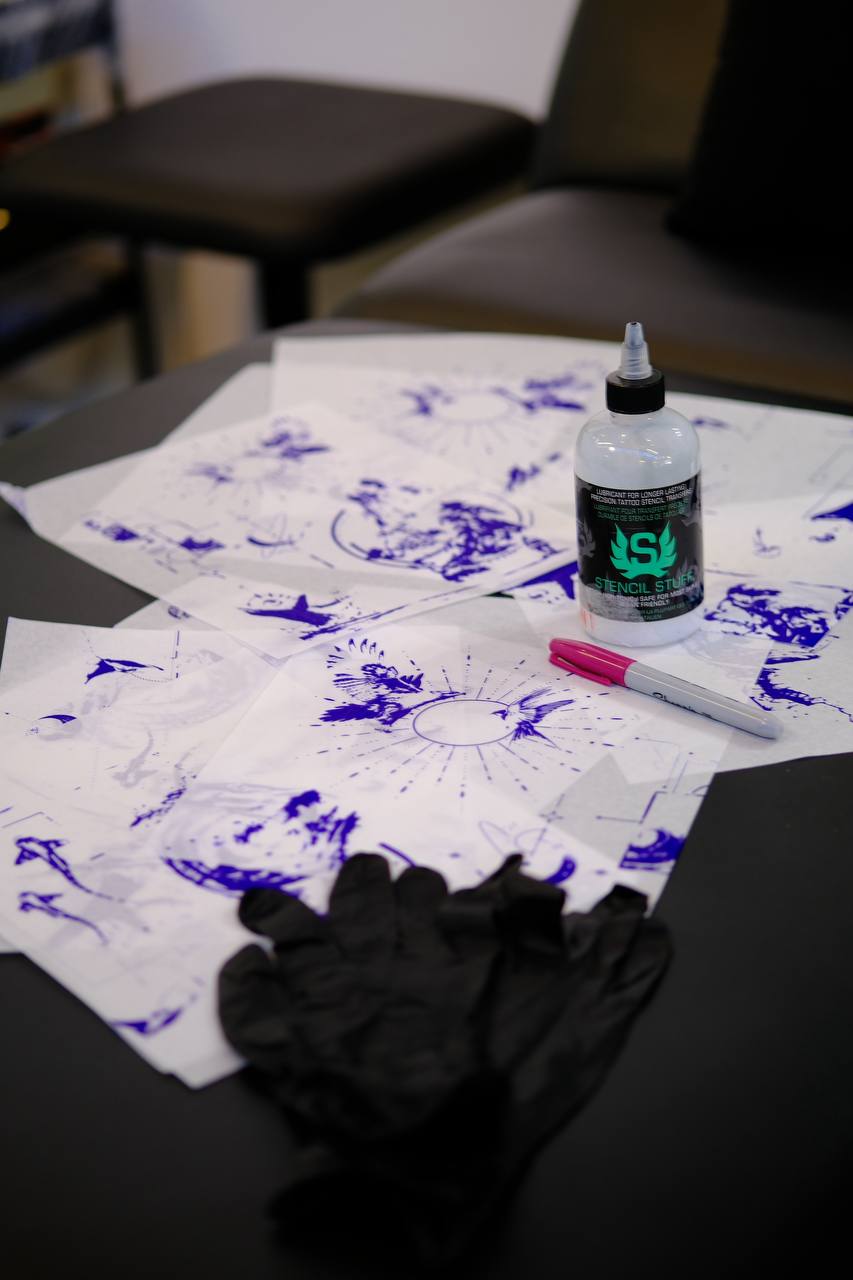
What does it mean to you to work with women after cancer-related surgeries and perform areola restoration?
It is extremely delicate work and a tremendous responsibility. Technically, you need to recreate the shape, color, dimension, and tonal transitions as naturally as possible, but there is always much more behind it than technique alone. You are working with a woman who has gone through treatment, surgery, and changes to her body that she never chose. That is why sensitivity, trust, and respect are especially important to me. I always remember that for the client, this is not simply an aesthetic procedure but part of a deeply personal journey involving her body, her experience, and her desire to feel whole again. It is important to me that she feels not only safe throughout the process, but also heard and accepted. Work like this makes it especially clear how far tattooing can extend beyond decorative art. It can become a small but meaningful part of returning to oneself, reconnecting with one’s femininity, and feeling comfortable in one’s own body again.
Karyna, what inspired you to begin researching complex skin at a professional and scientific level? Why was it important for you to create an educational guide and share this knowledge with other artists?
The more I worked with complex cases, the more I noticed how fragmented the information in this field was. Many artists learn from colleagues, through courses, or through their own trial and error. But when you are working with altered, traumatized, or scarred tissue, the cost of a mistake is much higher. It is not enough to simply master tattooing techniques—you need to understand the characteristics of the skin, its condition, its response to pigment, and the healing process that follows. At some point, I realized that I wanted not only to accumulate my own experience but also to systematize it. I wanted to understand not just which methods produced good results, but why they worked in specific cases, why one technique could be effective for one type of scar and completely unsuitable for another. That became the motivation for me to move beyond purely practical work and explore the subject more deeply.
I have been teaching for many years, so sharing knowledge has always been a natural part of my profession. At the same time, I understood that working with scars and other complex skin changes is not an area where you can simply give an artist a set of techniques and say, “Do it this way.” What matters is the artist’s ability to think—to assess the condition of the skin, understand its possibilities and limitations, choose the right technique and design, and, equally importantly, recognize when it is better not to proceed. That is why my educational guide is designed for experienced tattoo artists who already have a strong technical foundation and want to expand their professional expertise. I wanted to share not simply my own techniques and experience, but a structured approach that can help artists make more informed and responsible decisions.
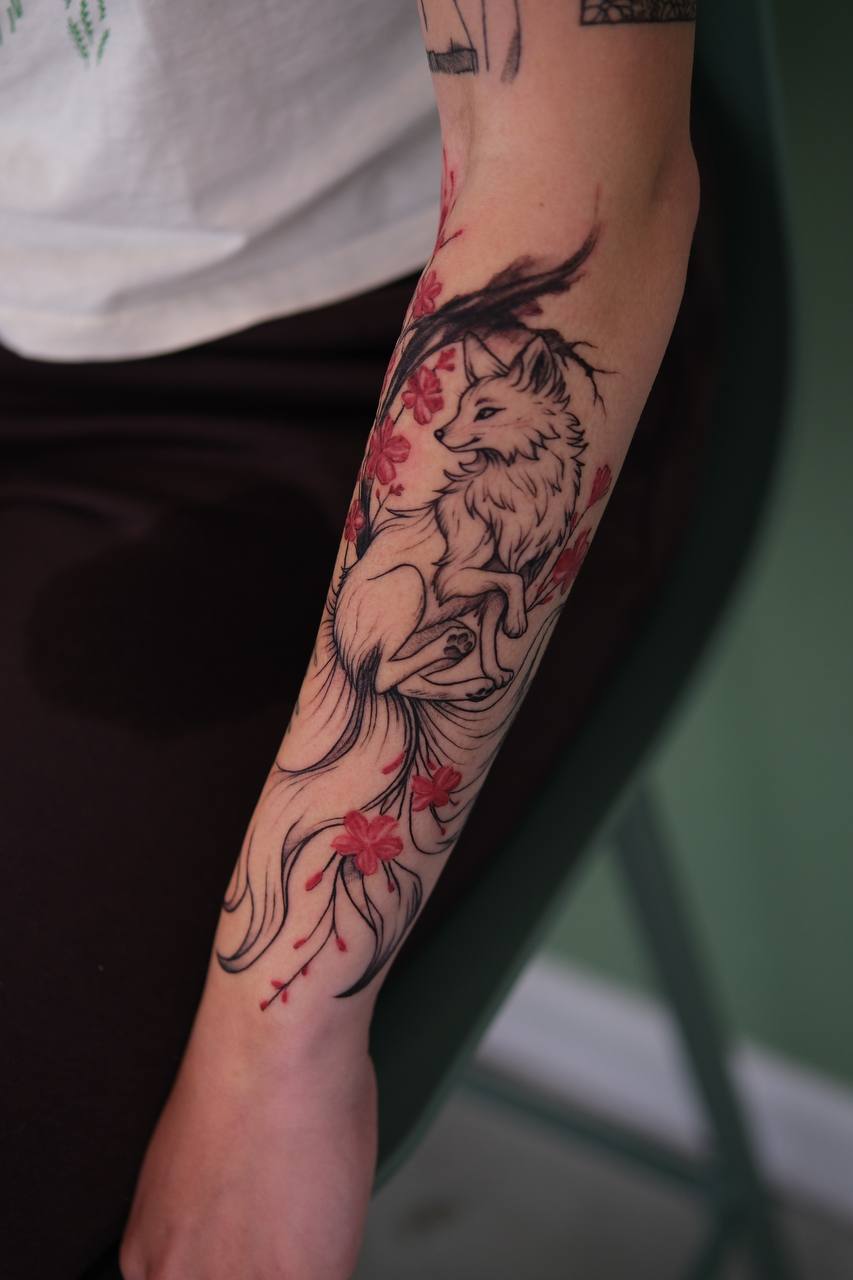
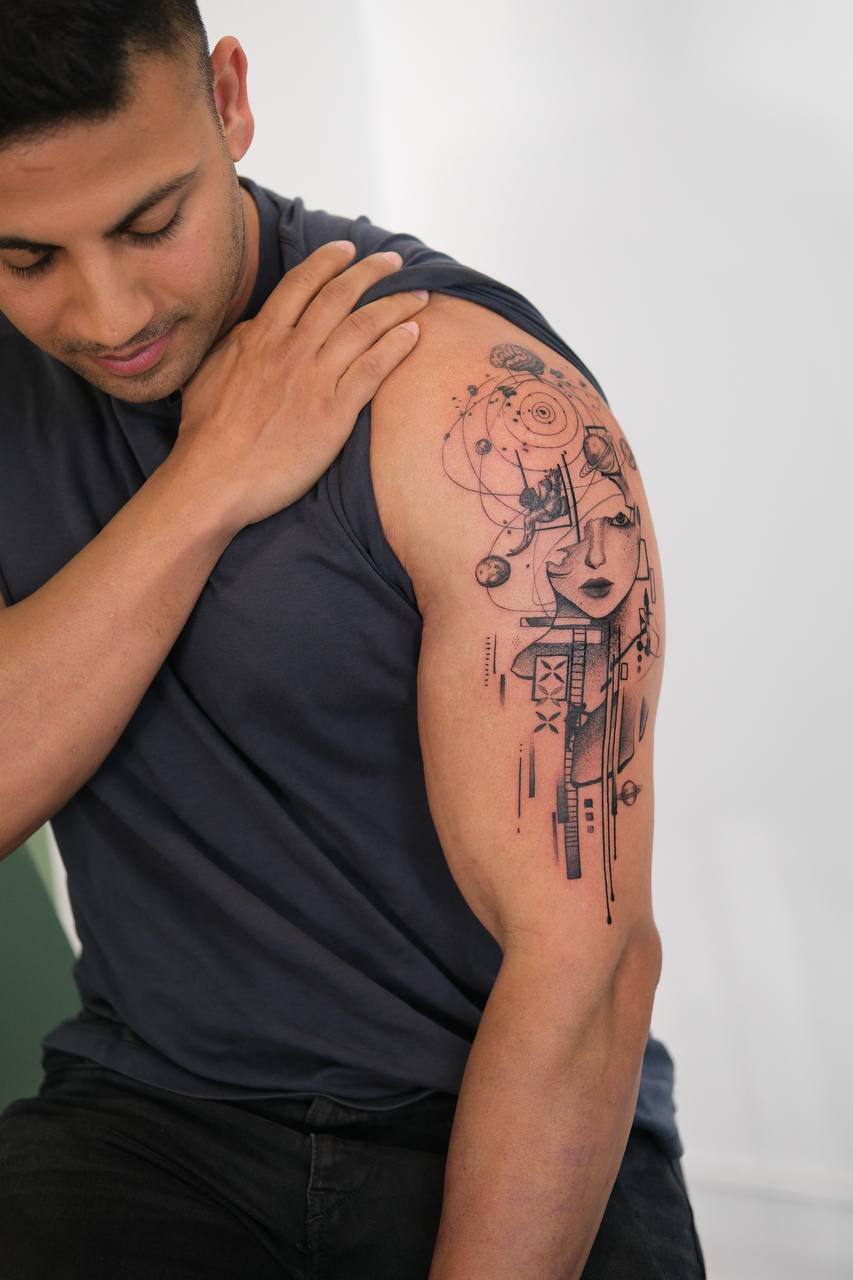
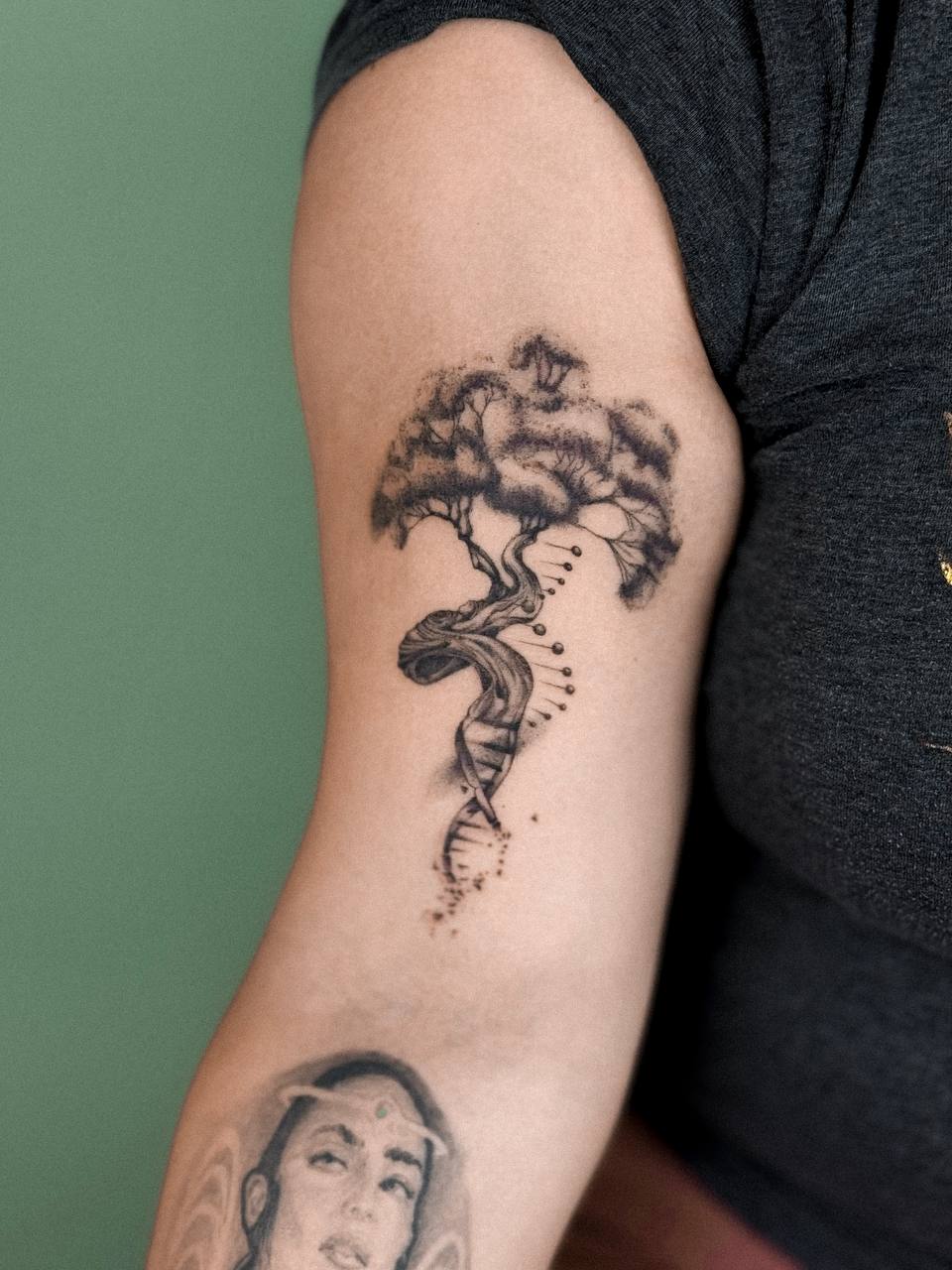
What has the American tattoo industry given you as an artist, and what have you brought into it from your own experience?
I came to the United States as an established artist with many years of experience, but entering a new market still meant rebuilding my professional reputation from the ground up. The American industry gave me scale: strong competition, international conventions, and the opportunity to work alongside artists with completely different backgrounds, schools, and approaches. For me, the journey from participating in and winning at American tattoo conventions to being invited to serve on judging panels has been particularly important. At the same time, I brought my own experience and artistic foundation, which I developed in Ukraine. Today, my professional approach is a combination of these two environments.

Karyna, how do you see your place in the modern tattoo industry?
I do not want to choose just one role. I remain a practicing artist and tattoo artist, while also teaching, conducting research, and participating as a judge. Working with scars, burns, postoperative changes, and areola reconstruction has become the area where all these aspects of my profession intersect. I am interested not only in creating strong work, but also in helping shape a more professional and responsible approach to working with complex skin within the industry.