Interview prepared by Alina Fartushna.
Maria Ryzhova is a cosmetologist and instructor in foundational cosmetology, developing her professional practice in Los Angeles, California. She gained valuable professional experience, including working as a leading specialist at Kharkiv’s Top Clinic. Maria specializes in treating problematic skin, particularly acne, uses professional DMK protocols, and develops personalized skincare programs tailored to each client’s individual characteristics and needs. A particularly important part of her professional work is her proprietary facial massage technique, “Combined Manual Massage Technique for the Face, Neck, and Décolleté,” which she aims to establish as an independent professional discipline and promote among beauty industry specialists. Her ambitions extend beyond individual cosmetology practice: she is focused on developing her own techniques, expanding her educational activities, and sharing professional knowledge.
instagram.com/cosmetologist.mariya
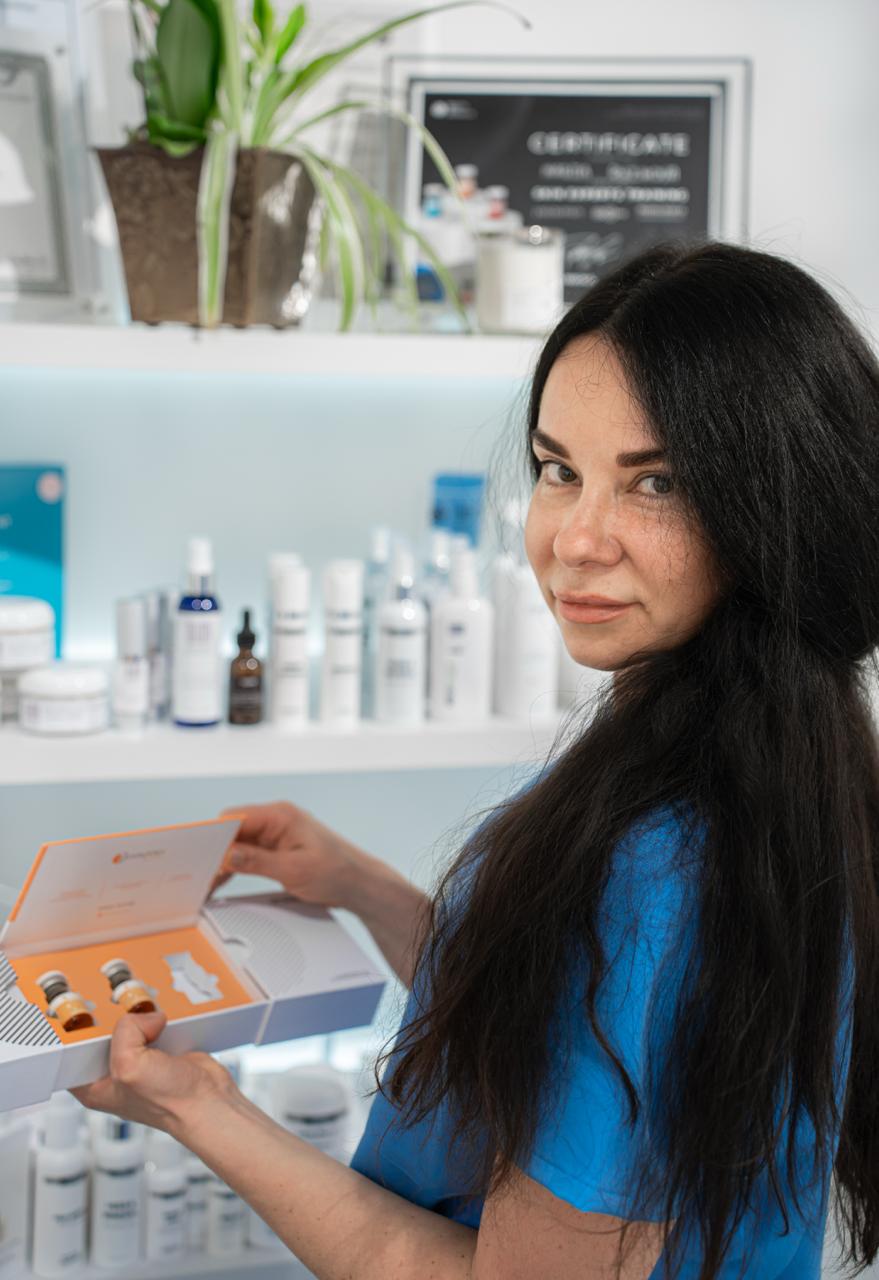
Maria, you currently work as a cosmetologist in Los Angeles. How did your integration into the American cosmetology market unfold? What professional challenges did you encounter?
After moving to the United States, my first priority was to continue working in my profession. I submitted my documents to obtain a cosmetology license, passed the required examinations, and received authorization to practice. I began by performing skincare treatments, facial cleansing procedures, and facial massages, gradually building my client base. My first clients came fairly quickly, largely through referrals from acquaintances and colleagues. At the same time, I encountered certain differences in professional approaches. For example, many clients were accustomed to viewing facial cleansing as a universal procedure, regardless of their skin’s actual condition. It was important to me not simply to accommodate such requests, but to explain which treatments were genuinely appropriate for each individual and why. Communication therefore became one of the key aspects of my work: I gradually built trust, introduced clients to a more personalized approach to cosmetology, and helped them better understand their skin’s needs. Today, I continue to develop my practice, drawing on my years of experience and the professional standards of the American market.
One of the areas of your professional activity is developing and refining your proprietary facial massage technique, “Combined Manual Massage Technique for the Face, Neck, and Décolleté.” Tell us how the idea of creating this method came about.
My technique is the result of many years of practice and numerous professional training courses. Throughout my career, I have studied a wide range of massage techniques and gradually began to notice which elements produced the best results and which could be improved. For example, I noticed that during certain massage treatments, products with a high oil content could trigger breakouts, particularly in clients prone to acne. I wanted to eliminate this unwanted effect, so I began experimenting with the products I used during massage sessions and testing different approaches, initially on my mother, friends, and people close to me. At the same time, I selected the most effective elements from various techniques, combined them, and developed my own sequence of movements. This is how my method gradually took shape, and I continue to use and refine it in my professional practice.
What is the fundamental difference between your proprietary facial massage technique and the traditional massage methods currently used in cosmetology?
I would not say that my technique completely rejects traditional methods, because its foundation is precisely the professional knowledge and techniques I have acquired over many years. Its distinctive feature is the combination of different approaches, from which I selected the most effective stages for working with facial tissues. For me, it is not simply about the sequence of movements, but about how they interact and what results they produce when combined. Another fundamental aspect is the product used during the treatment: I work with a cleansing base to avoid creating an additional risk of breakouts in clients prone to acne. I also do not follow exactly the same routine with every person, as I take into account tissue condition, facial characteristics, and the degree of age-related changes. It is this combination of a carefully structured sequence, an individualized approach, and years of hands-on experience that forms the foundation of my technique.
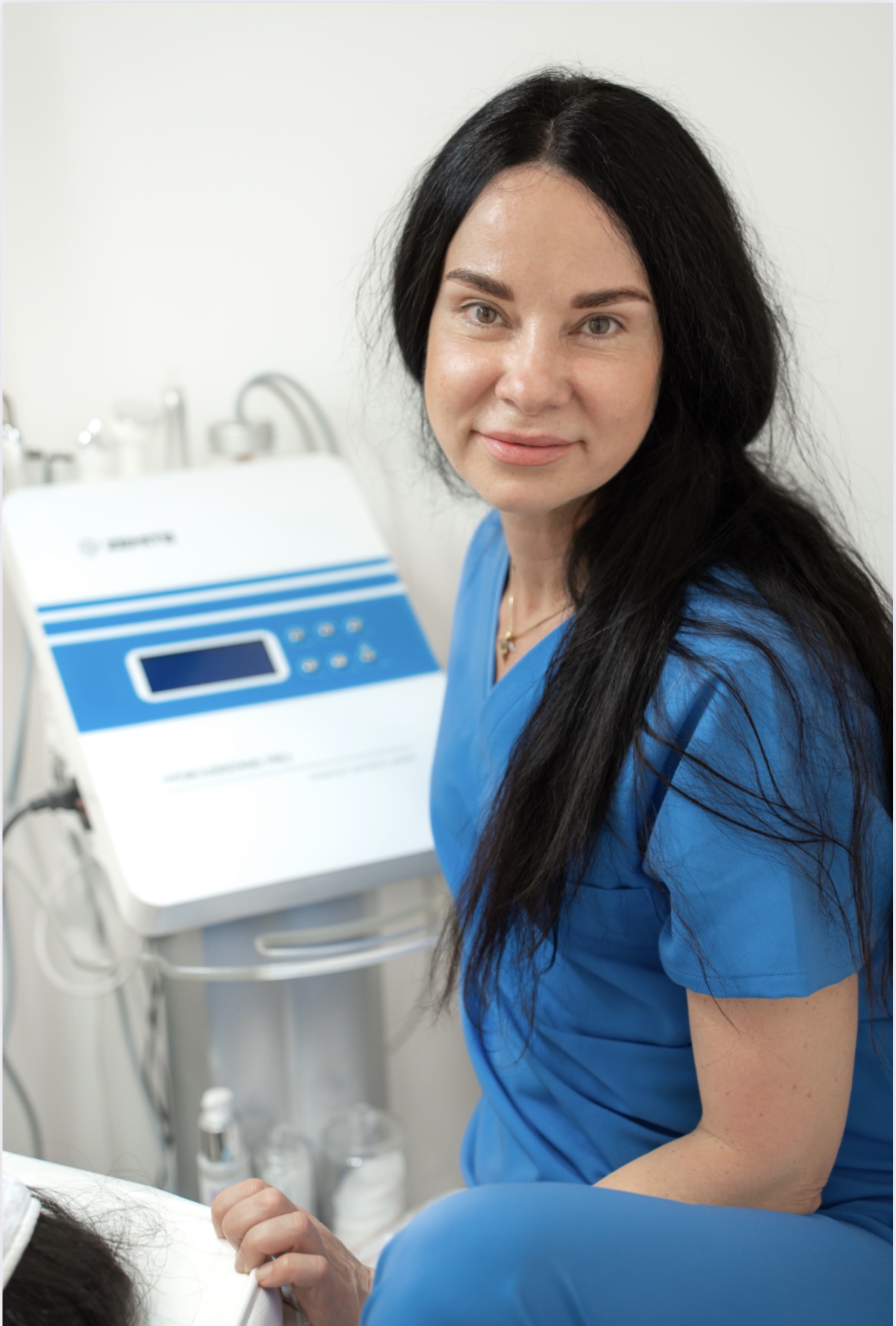
Maria, which areas of the face and tissue characteristics do you take into consideration during your treatments? How do you determine the appropriate intensity and sequence of procedures for each client?
Before beginning any treatment, I always conduct a consultation because I want to understand not only what the client sees in the mirror, but also the overall condition of their skin and the specifics of their lifestyle. I ask about previous cosmetic procedures, daily habits, skincare routines, and also pay attention to facial expressions and how the facial muscles function during conversation. For example, if I notice pronounced changes in the submental area, I select an appropriate intensity and sequence for working with that region. If I am working with a client who has thin skin and a fine-wrinkle aging pattern, my approach will be entirely different, as excessive pressure would be inappropriate in such a case. There are also certain conditions in which I may modify the protocol or decline to perform the treatment altogether, because client safety will always be more important than achieving a desired aesthetic result. That is why every treatment plan is developed individually, based on the specific characteristics of each person.
Could you tell us what aesthetic results clients can achieve with your technique? What concerns is it most effective in addressing?
Most often, clients come to me concerned about loss of tissue firmness, changes in facial contours, the appearance of a double chin, and pronounced age-related changes. My technique focuses on working with the facial muscles and tissues, so it is not simply a relaxation treatment but a more targeted cosmetological approach. Initial changes may be noticeable after just one session, although these results are temporary, and I recommend a course of treatments for a more pronounced effect. One of the first illustrative cases in my practice involved a client who had a noticeable double chin and was not particularly convinced that massage could make a difference. We completed ten sessions, and toward the end of the course, she began noticing that people around her were commenting on the changes in her appearance: her facial contours had become more defined, and her double chin was less noticeable. At the same time, I always explain to clients that massage does not replace injectable cosmetology or surgical procedures; it is a separate area of skincare with its own capabilities and indications.
Maria, you are also an instructor in foundational cosmetology. Tell us about your teaching experience. What knowledge and practical skills do you aim to impart to future specialists?
My teaching experience began in Ukraine, when fellow cosmetologists started approaching me to learn massage techniques. Initially, I offered individual training, which grew through professional connections and referrals. Later, I was invited to teach at an organization specializing in cosmetologist training, giving me the opportunity to share my knowledge as an instructor in a dedicated massage discipline. In the United States, I have gradually resumed this work as well, so far conducting individual training sessions for specialists, particularly through referrals from colleagues in Ukraine. For me, teaching is not simply about demonstrating a sequence of movements; it is about explaining the logic behind each stage, teaching students to feel the tissues, and helping them understand how to adapt a technique to an individual client. I want my students to leave not merely able to reproduce memorized movements, but capable of applying them consciously and confidently in their own practice.
Maria, what professional goals have you set for yourself over the next few years in the American cosmetology industry?
I have quite ambitious plans, and one of my biggest goals is to open my own massage school in the United States. I would like to create a space where I could teach not only my proprietary facial massage technique, but also other disciplines, including various types of body massage. I am interested in expanding my educational activities, working with cosmetologists, and sharing practical knowledge they can apply in their professional practice. At the same time, I have another important professional goal at the moment: having my medical education credentials recognized in the United States. In Ukraine, I received medical training in several fields, including paramedicine, laboratory diagnostics, and nursing, and I am now preparing for the examination required to validate my nursing qualifications. It is a lengthy and demanding process, but I understand how important it is for my future professional development. I want to continue growing in cosmetology, teaching other specialists, and gradually transforming my professional expertise into a fully developed educational program in the United States.